Sealless Pumps for a Safer and Greener World

Choosing a dependable Welded Metal supplier is rarely as simple as comparing prices online. Global buyers must examine material grades, weld quality, production capacity, documentation, and delivery performance. A polished website proves very little.
This guide reviews seven welded metal suppliers serving international markets. It focuses on practical signals, including mill certificates, welding procedures, inspection reports, and traceability from raw material to finished shipment. Buyers should also check whether suppliers understand relevant standards, packaging requirements, and destination-specific import procedures. A strong supplier can explain tolerances clearly, answer technical questions, and provide consistent samples before a large order.
Details matter.
A crate arriving with bent frames or surface corrosion can erase a small price advantage. Lead times also deserve careful attention, especially when production schedules depend on custom dimensions or special coatings. Some suppliers may offer impressive capabilities but lack reliable communication during delays. Others may respond quickly yet provide limited testing evidence. Neither weakness should be ignored.
The selection process behind this overview considers manufacturing experience, quality controls, export readiness, customer feedback, and the clarity of available technical information. However, supplier conditions can change, and online claims are not final proof. Buyers should request current certificates, confirm production locations, and inspect samples when practical. No list can replace careful due diligence. Use these seven names as a focused starting point, not an automatic purchasing decision.
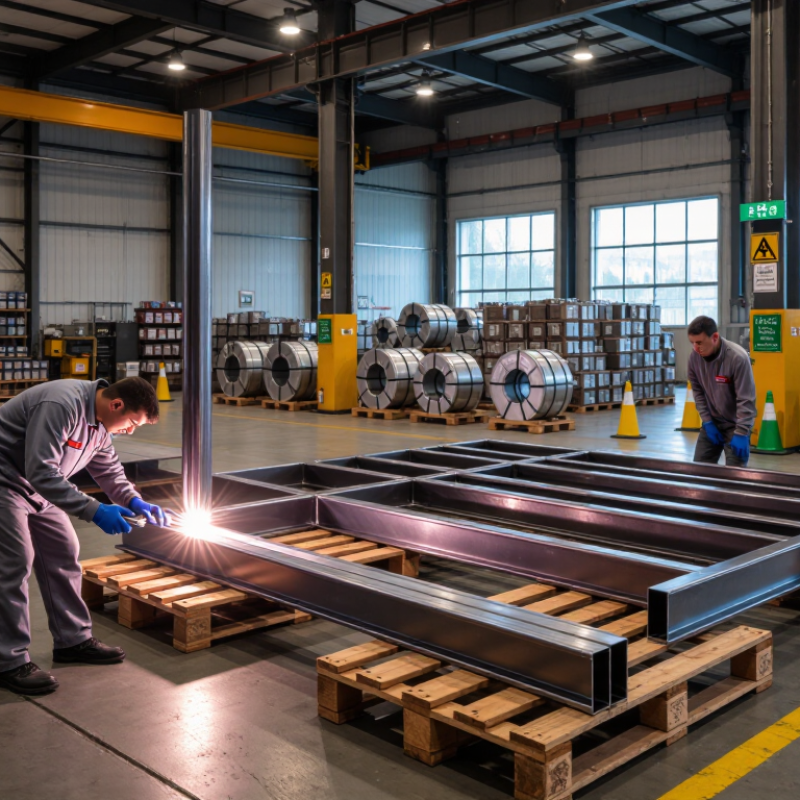
A reliable welded metal supplier proves performance before asking for a large order. In procurement reviews, I look beyond attractive product photos and low quotations. The supplier should explain its welding process, base materials, tolerances, and inspection methods in clear technical language. Qualified welders, calibrated equipment, and documented procedures matter. So does consistency.
Traceability is another practical test. Each batch should connect to material certificates, welding records, inspection results, and shipment details. Independent testing may include visual checks, dimensional inspection, leak testing, or non-destructive examination, depending on the component’s use. A dependable supplier also follows recognized quality and safety requirements for the destination market. Ask for current certificates, not scanned documents with missing dates.
Communication reveals operational maturity. Reliable teams confirm drawings, surface finishes, packaging, lead times, and acceptable tolerances before production begins. They report a delay early and propose a workable correction. Small details count. Moisture-resistant packaging, edge protection, and clear labels can prevent damage during long transport.
No supplier is flawless. I once treated a quality certificate as stronger evidence than a complete production record. That was too optimistic. A factory visit, sample inspection, and written corrective-action process would have reduced the risk. Buyers should also compare capacity with the requested volume, because an excellent workshop may still struggle with a sudden global order. Reliability is demonstrated through repeatable evidence, not confident promises.
When comparing the seven best welded metal suppliers, look beyond product photos and quoted prices. A polished website proves little. I have found that reliable suppliers explain their welding procedures, inspection methods, and material sources clearly. Ask for mill certificates, weld inspection reports, and sample records. Traceability matters when a project includes many batches. Check whether the supplier follows recognized quality systems and maintains trained, qualified welders. Production capacity also deserves attention. A factory may accept large orders but struggle with consistent delivery.
Tips: Request a small sample first. Measure weld size, surface finish, distortion, and packaging. Ask for realistic lead times, not optimistic promises. Compare responses, not just prices.
Communication reveals operational maturity. During evaluation, note how quickly the supplier answers technical questions. Do they understand drawings, tolerances, surface treatments, and loading requirements? Strong suppliers identify unclear details before production begins. They should also provide a practical corrective-action process when defects appear. References from similar export projects can support their claims, but verify them carefully. Some references may be outdated.
Cost should include tooling, testing, packaging, freight coordination, and possible rework. The cheapest offer may become expensive after delays or rejected parts. Review payment terms and production milestones with care. I sometimes overvalue impressive equipment during audits; process discipline is usually more important. A smaller workshop with careful records may outperform a larger facility. Compare evidence, consistency, and accountability across every supplier.
| Supplier Profile | Primary Welding Processes | Common Materials | Typical Thickness Range | Quality Certifications | Prototype Capability | Typical Production Lead Time | Export Readiness | Best Fit |
|---|---|---|---|---|---|---|---|---|
| Profile 1 | MIG/MAG, TIG, robotic welding | Carbon steel, stainless steel, aluminum | 1–12 mm | ISO 9001; welding procedures qualified to applicable project standards | Yes; low-volume samples and first articles | 3–6 weeks after drawing approval | Commercial export packing, inspection documents, and standard ocean freight support | General industrial enclosures and fabricated assemblies |
| Profile 2 | TIG, orbital welding, manual precision welding | Stainless steel, nickel alloys, titanium | 0.5–6 mm | ISO 9001; material traceability available by order | Yes; engineering review and sample validation | 4–8 weeks after approved specifications | Export documentation, heat-number tracking, and protective packaging | Clean-process equipment, tubing, and corrosion-resistant parts |
| Profile 3 | Laser welding, TIG, micro-welding | Stainless steel, aluminum, galvanized steel | 0.3–8 mm | ISO 9001; dimensional inspection records available | Yes; suitable for complex small assemblies | 2–5 weeks for standard assemblies | International freight coordination and multilingual technical documentation | High-appearance parts and lightweight precision assemblies |
| Profile 4 | FCAW, GMAW, submerged arc welding | Carbon steel, low-alloy steel, weathering steel | 6–40 mm | ISO 9001; project-specific welder and procedure qualifications | Limited; mainly for repeatable industrial designs | 6–12 weeks depending on steel grade and volume | Heavy-load packing, export crating, and container loading plans | Structural frames, platforms, brackets, and heavy equipment bases |
| Profile 5 | MIG/MAG, TIG, spot welding, press joining | Cold-rolled steel, galvanized steel, stainless steel | 0.8–5 mm | ISO 9001; incoming and final inspection procedures | Yes; tooling and pilot-run support available | 4–7 weeks after tooling or production approval | Flat-pack protection, palletization, and routine export paperwork | Electrical cabinets, machine guards, racks, and sheet-metal products |
| Profile 6 | Robotic MIG/MAG, TIG, resistance welding | Mild steel, stainless steel, aluminum | 1–10 mm | ISO 9001; statistical process controls for repeat production | Yes; optimized for repeat orders and production scaling | 5–10 weeks for medium-to-large batch orders | Container consolidation, quality dossiers, and scheduled shipment planning | Automotive-support components, furniture frames, and repeat assemblies |
| Profile 7 | TIG, MIG/MAG, pipe welding, pressure-tested fabrication | Carbon steel, stainless steel, aluminum | 1–25 mm | ISO 9001; inspection and pressure-test records available by contract | Yes; drawing review, samples, and test assemblies | 5–9 weeks depending on testing and surface treatment | Export packing, inspection coordination, and project shipment tracking | Tanks, manifolds, pipe assemblies, and process-system components |
Seven Leading Welded Metal Suppliers for International Buyers
Global buyers need more than low quotations. The World Steel Association reported 1.892 billion tonnes of crude steel production in 2023, showing the market’s enormous scale. Yet volume does not guarantee consistent welded quality. A practical shortlist should include seven supplier profiles: carbon-steel fabricators, stainless-steel specialists, structural-section producers, precision-tube manufacturers, welded-mesh producers, pressure-component fabricators, and custom assembly workshops.
Each supplier should provide traceable heat numbers, EN 10204 3.1 certificates, welding procedure qualifications, and dimensional inspection records. ISO 3834 certification can strengthen confidence in welding quality, while ISO 9001 supports repeatable process control. The International Organization for Standardization identifies welding quality management as a key factor in reducing defects and rework. Ask for sample weld photographs and independent non-destructive testing results.
Logistics also deserves close attention. The World Bank’s 2023 Logistics Performance Index shows major differences in customs efficiency, shipment tracking, and delivery reliability across trading economies. Request realistic lead times, packaging details, corrosion protection, and replacement procedures. A polished website is not proof. I would inspect factory capacity before trusting impressive claims. Some suppliers communicate well but struggle with drawing revisions. Others weld accurately yet document poorly. That gap is easy to miss. Careful buyers should compare technical evidence, production experience, and after-sales responsiveness before selecting a long-term partner.
Seven Leading Welded Metal Suppliers for International Buyers
Yield-strength benchmarks help international buyers compare the material capabilities offered by welded metal suppliers. Values represent typical minimum specified yield strengths for widely used grades; exact requirements should be confirmed through applicable standards, mill certificates, welding procedures, and inspection documentation.
Choosing among the seven best welded metal suppliers requires more than comparing prices. Product quality starts with controlled materials, qualified welders, and repeatable inspection procedures. Look for suppliers that provide mill certificates, weld procedure specifications, and traceable batch records. Clear documentation builds confidence during international procurement.
Certifications matter when they match the project, not merely when they appear on a website. ISO 9001 supports quality management, while ISO 3834 can indicate stronger welding controls. Depending on the application, buyers may also request EN 10204 inspection documents or AWS D1.1 compliance. Always verify certificate scope, issuing body, and expiration date. A certificate alone can mislead.
Manufacturing capability separates reliable suppliers from attractive but limited options. Assess cutting accuracy, forming capacity, welding processes, surface treatment, and non-destructive testing. Ask for sample reports, dimensional records, and photographs of actual production areas. Automated welding may improve consistency, but skilled manual work remains valuable for complex joints. Small details matter. I would also inspect packaging plans, because exposed welds can corrode during ocean transport. Some suppliers communicate impressively yet struggle with revisions or delayed feedback. That weakness deserves attention. A practical evaluation should include a pilot order, factory audit, and realistic production schedule before full-scale purchasing.
Choosing among the seven best welded metal suppliers requires more than comparing prices. Match each supplier’s welding experience to your material, joint design, and production volume. A supplier skilled in stainless steel may not handle thick carbon steel with equal consistency. Ask for recent project photos, inspection records, and sample welds.
Request clear evidence of quality control. Reliable suppliers should explain welder qualifications, equipment maintenance, material traceability, and non-destructive testing. Their drawings should show tolerances, weld sizes, surface finishes, and inspection points. I would also check how they manage design changes. Small communication gaps can become costly fabrication errors.
Ask about production capacity and delivery planning. Confirm monthly output, packaging methods, export documents, and transport options before signing. A supplier with a lower quotation may exclude testing, finishing, or protective packaging. That price is not truly lower. Video audits can reveal practical details, such as organized work areas and labeled material racks. Still, online evidence is limited. An on-site inspection or independent quality check may be worth the cost. Suppliers should answer technical questions directly, not hide behind general promises. Good records matter. Review corrective-action reports, customer references, and response times. A supplier can be highly skilled yet unsuitable if its schedule, communication style, or minimum order quantity conflicts with your project.


