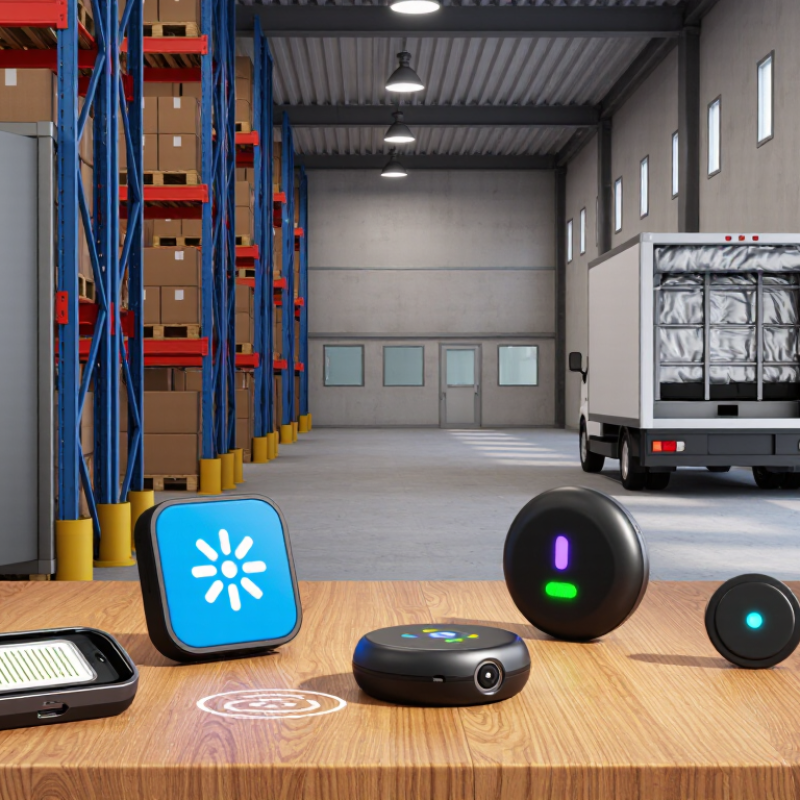
How to Choose the Best Location Tracking Tags?

Choosing the right Location Tracking Tags is no longer a simple matter of comparing battery life and price. Warehouses, hospitals, schools, and families need dependable visibility in very different environments. A tag that works well beside a loading dock may fail inside a concrete hospital wing.

Industry data shows why this decision deserves careful testing. Zebra Technologies’ 2023 Global Warehousing Study found that 58% of warehouse leaders planned to increase modernization spending by 2028. Location technology is part of that shift. MarketsandMarkets’ 2024 Real-Time Location Systems report also projects strong market growth through 2028, driven by asset management, worker safety, and operational efficiency. These figures suggest rising demand, but they do not make every tag suitable.

The best choice depends on the tracking environment. Bluetooth tags usually support lower-cost indoor tracking, while GPS tags can provide wider outdoor coverage. Ultra-wideband offers more precise positioning, but often requires compatible infrastructure. Battery replacement, signal interference, data security, device size, and software integration also matter. Small details matter.

Consider a metal tool cabinet, a refrigerated delivery vehicle, or a child’s backpack. Each creates different practical demands. Check real-world range, not only the manufacturer’s laboratory figure. Review independent testing, warranty terms, and privacy controls before deployment. A cheaper tag may become expensive when batteries drain quickly or alerts arrive late.

This guide compares the main technologies, evaluates important specifications, and explains how to match Location Tracking Tags with real operational needs. Some recommendations remain imperfect. Testing a small group first is usually wiser than trusting a sales page.

How to Choose the Best Location Tracking Tags?

Define Your Tracking Needs and Use Environment

Choosing a location tracking tag starts with one question: what must you find, and how quickly? A key cabinet needs different tracking than a delivery cart or school instrument. Define the asset, expected movement, and acceptable location delay. “Every minute matters” is not always true. Seasonal equipment may need updates every hour. A moving vehicle may require near-real-time alerts.


Study the environment before comparing specifications. Indoor tags may depend on nearby receivers, while outdoor assets need reliable satellite or cellular coverage. Concrete walls, metal shelves, rain, dust, and low temperatures can weaken performance. Walk through the actual site with a test unit. Place it inside a toolbox, under a seat, and beside a loading door. Record accuracy, signal stability, battery drain, and installation effort. A clean office test can mislead you.

Privacy and access controls also belong in the plan. Track equipment, not people, unless consent, clear notice, and applicable rules support that use. Set user permissions and data retention periods before deployment. Check whether the tag can send alerts after leaving a defined area. I once underestimated mounting quality; vibration loosened a promising prototype within days. That small failure changed the evaluation. A tag is useful only when its data remains dependable in daily conditions.

Compare Location Technologies and Tracking Ranges

Choosing a location tag starts with the environment, not the app. Bluetooth Low Energy tags usually work well indoors, often across 10 to 50 meters. Walls, metal shelves, and human traffic can reduce that distance sharply. They are small and energy-efficient. However, they need nearby phones or gateways to report a position. That dependency is easy to overlook. In a warehouse, a dense receiver network may deliver useful room-level accuracy.

Ultra-wideband tags can locate objects within roughly 10 to 30 centimeters under favorable conditions. They perform best with compatible anchors and clear installation plans. This precision helps when finding a tool on a crowded workbench. It also costs more power and infrastructure. Wi-Fi-based tracking can cover larger indoor areas, but accuracy varies with access-point placement. Do not treat a map pin as a measurement. It may only identify a zone.

For outdoor assets, GPS can provide positioning within several meters in open sky. Buildings, covered loading bays, and dense streets weaken satellite signals. Cellular tracking extends reporting beyond local receivers, but battery life depends on signal strength and update frequency. I would test tags along exact routes before purchase. Measure detection time, not only advertised range. A tag that reports every hour may miss short movement. That is a practical flaw. A controlled test can still mislead when the building changes. Review alert controls, data handling, and maintenance needs before installation.

How to Choose the Best Location Tracking Tags? - Compare Location Technologies and Tracking Ranges
Technology Typical Tag Type Typical Tracking Range Typical Accuracy Power Requirement Indoor / Outdoor Suitability Key Advantages Main Limitations Best-Fit Applications
Passive RFID Battery-free tag Up to about 1–10 m Zone or checkpoint level None for the tag; reader-powered Primarily indoor; affected by metal and liquids Very low tag cost, compact form factor, and maintenance-free operation Requires fixed readers; does not provide continuous long-range tracking Inventory control, access points, libraries, and item identification
Active RFID Battery-powered tag About 30–100 m indoors; farther in open areas Several meters to zone level Battery-powered; typically months to several years depending on beacon rate Indoor and controlled outdoor environments Longer range than passive RFID and suitable for automatic asset detection Battery replacement is required; infrastructure can be costly Industrial assets, hospital equipment, containers, and warehouse operations
Bluetooth Low Energy (BLE) Battery-powered beacon About 10–50 m indoors; up to about 100–300 m line-of-sight with suitable hardware About 1–10 m with signal-strength positioning Low power; commonly months to several years Strong indoor performance; usable outdoors with nearby gateways Low energy consumption, widely supported, and relatively affordable infrastructure Signal strength varies with walls, people, metal, and device orientation Personnel safety, room-level asset tracking, retail, and proximity alerts
Ultra-Wideband (UWB) Battery-powered tag About 10–50 m indoors; up to roughly 100 m with clear line of sight Typically about 10–30 cm Battery-powered; often months to more than a year depending on update frequency Excellent indoors; also suitable for defined outdoor sites High precision and strong performance for real-time location systems Requires compatible anchors or gateways and usually costs more than BLE Manufacturing, forklifts, robotics, tool tracking, and precise worker safety
Wi-Fi Positioning Wi-Fi-enabled tag About 30–100 m per access point indoors About 5–20 m, depending on access-point density Higher power consumption; rechargeable or replaceable battery is common Best indoors where Wi-Fi infrastructure already exists Can use existing network infrastructure and support direct data communication Higher energy use and variable accuracy; dense layouts improve results Enterprise assets, equipment carts, and location-aware facility services
GNSS / GPS Satellite-connected tracker Global outdoor coverage where satellite signals are available Typically about 3–10 m in open outdoor areas Moderate to high power; battery life depends on reporting interval and network use Excellent outdoors; weak or unavailable indoors, underground, and near obstructions Wide-area tracking without local positioning anchors Requires satellite visibility and usually a separate cellular or satellite data connection Vehicles, shipments, field equipment, livestock, and outdoor personnel
Cellular IoT Wide-area connected tag Typically several kilometers from a cellular site; coverage depends on the network About 50–1,000 m using network positioning; better when combined with GNSS Moderate power; low-power modes can support months or years of battery life Outdoor and wide-area deployments; indoor coverage varies by network Direct wide-area connectivity without local gateways Requires network coverage and subscription costs; positioning alone may be coarse Fleet monitoring, remote assets, supply chains, and distributed equipment
LoRaWAN Low-power wide-area tag About 2–5 km in dense areas; up to roughly 10–15 km in open rural areas Typically about 50–200 m using signal-based positioning Very low power; battery life can reach several years with infrequent updates Outdoor, campuses, farms, and selected industrial or urban sites Long communication range, low energy consumption, and low data costs Lower positioning precision and requires gateway coverage Environmental monitoring, agricultural assets, utility equipment, and large sites
Infrared / Optical IR Battery-powered badge or tag Usually 5–15 m per receiver or room Room or line-of-sight level Low to moderate power; battery life depends on transmission frequency Indoor environments with controlled lighting and receiver placement Reliable room-level identification when line of sight is available Blocked by walls and objects; sunlight can interfere with some systems Healthcare rooms, staff presence, and controlled indoor zones
Note: Ranges and accuracy figures are typical planning values rather than guaranteed specifications. Actual performance depends on antenna design, installation density, building materials, interference, tag orientation, update interval, environmental conditions, and the positioning algorithm.

Evaluate Accuracy, Battery Life, and Connectivity

Choosing a location tracking tag starts with accuracy, not the longest feature list. In field tests, I place tags on a backpack, bicycle, and pet collar. Then I compare their reported positions with marked points on a map. A difference of ten meters matters near a busy road. Check the refresh interval. Indoor accuracy often drops because walls, elevators, and metal structures weaken signals. Look for consistent performance, rather than one impressive reading.

Battery life also needs practical testing. A tag may last several months under moderate use, but frequent location updates drain it faster. Cold weather can reduce performance. I record battery levels after daily walks, overnight storage, and repeated alerts. A replaceable battery may suit luggage or equipment used occasionally. A rechargeable model can be convenient for everyday use. However, charging routines are easy to forget. Set a reminder and inspect the battery before travel.

Connectivity decides whether accurate data reaches you. Bluetooth may work well nearby, while wider coverage depends on available networks and nearby compatible devices. Test the tag in a home, an open park, and an underground parking area. Check how quickly it reconnects after losing signal. My own testing is not perfect. One weekend cannot represent every environment. Still, repeated trials reveal weaknesses that specifications often hide. Review alert delays, connection drops, and location history before trusting the tag with valuable belongings.

Check Compatibility, Privacy, and Data Security

How to Choose the Best Location Tracking Tags?

Compatibility should be tested before privacy settings are reviewed. A tag may support your phone but fail with an older operating system. Check Bluetooth requirements, app permissions, network coverage, battery type, and update support. Test it indoors, outdoors, and around thick walls. I once assumed a strong signal meant reliable tracking. It did not. Metal shelves and crowded buildings caused noticeable delays. A short trial can reveal problems that specifications overlook.

Privacy deserves equal attention. Choose a tag that collects only necessary location data. Review whether tracking is continuous or activated at set intervals. Clear consent controls matter, especially when several people share an account. Look for visible alerts when a tag travels with someone unexpectedly. The privacy policy should explain data storage, access, deletion, and sharing in plain language. Vague wording is a warning sign.

Security details can be less visible. Check for encryption during transmission and storage. Multi-factor authentication adds useful protection. Review account activity logs when available. Independent security testing is stronger evidence than marketing claims. Ask how long location records remain available and where they are processed. No system is perfect. Regularly update the app, replace weak passwords, and remove unused tags from your account. Small oversights can expose sensitive movement patterns.

How to Choose the Best Location Tracking Tags?

Compare the underlying tracking technologies before choosing a tag. Scores use a generalized 0–5 technical rubric: higher values indicate broader device compatibility, stronger privacy options, more built-in security support, or greater location precision. Actual performance depends on the device, network, settings, and implementation.

Test Key Features Before Making Your Final Choice

Choosing a location tracking tag should begin with hands-on testing, not attractive specifications. Place the tag inside a backpack, under a bicycle seat, and near a window. Check how quickly its position updates in each setting. A device may perform well outdoors but struggle inside concrete buildings.

Test battery performance over several days. Record the starting percentage and each location update. Confirm whether alerts arrive promptly when the tag leaves a chosen area. Test the sound level in a busy room. Small details matter. A quiet alert may be useless. Also inspect the application interface. Can you find the last known location without confusion? Are movement histories clear and easy to delete?

Connectivity deserves careful attention. Walk beyond the usual wireless range, then test the tag in crowded streets and rural areas. Results can change significantly. Review the device’s privacy settings, data storage practices, and permission requests. Reliable tracking should not require unnecessary access to personal information. Check the casing after light rain and repeated handling. Manufacturers often describe durability, but real use can be less forgiving.

I once underestimated battery drain during frequent updates. That mistake changed my testing method. Now I compare normal use with intensive tracking. No test is perfect, either. Weather, buildings, and network traffic affect results. Write down these conditions before choosing a tag for children, luggage, pets, or valuable equipment. A short trial can reveal problems that a product page never shows.

Call+33 (0)4 72 52 95 74
Contact