Sealless Pumps for a Safer and Greener World

Choosing a General Electric Relay requires more than matching a catalog number to a familiar machine. The correct choice depends on coil voltage, contact arrangement, switching capacity, response time, and installation conditions. A relay may operate perfectly on a workbench yet fail inside a hot control cabinet. Dust, vibration, moisture, and repeated switching can change its real performance.
Practical selection begins with the circuit itself. Record the control voltage, load type, inrush current, and available mounting space. Check whether the contacts will switch a motor, heater, solenoid, or sensitive electronic signal. Review the manufacturer’s datasheet, wiring diagram, terminal markings, and approved operating limits. A small mismatch can cause contact welding, nuisance trips, or an overheated coil. It is also wise to verify insulation ratings and compatibility with the existing control system.
Experience shows that the cheapest relay is not always the most economical choice. Service history, replacement availability, and maintenance access matter too. I have seen specifications interpreted too narrowly, especially when engineers considered only continuous current. That approach needs reconsideration. Starting current and switching frequency may be more important. Field testing, documented measurements, and advice from qualified electrical professionals improve confidence before installation. No single relay suits every application. This guide explains the key questions, practical checks, and common mistakes involved in selecting a reliable General Electric Relay.
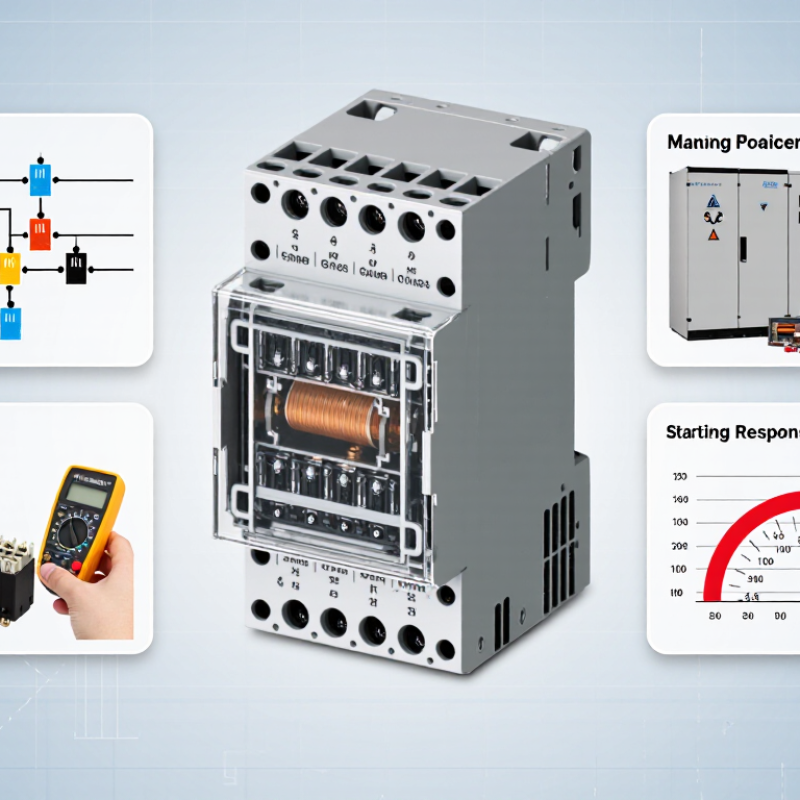
How to Choose a General Electric Relay?
Identify the application before selecting a relay. A relay for motor control faces different demands than one for a small alarm circuit. Define what the relay must switch, how often it operates, and where it will be installed. Check the control voltage, load voltage, and current carefully. AC and DC loads behave differently, especially during startup.
Choose the required relay function next. A normally open contact closes when energized. A normally closed contact opens instead. Changeover contacts can switch between two circuits. Confirm whether you need isolation, timing, latching, or simple on/off control. A recurring field lesson is this: rated current alone may not protect the contacts. Motors, solenoids, and lamps can create strong inrush current. The relay may appear suitable, then fail early. I have seen selection errors begin with an unreadable load label.
Tips: Measure the actual circuit voltage with a meter. Record the load’s running and starting current. Match the coil rating exactly. Leave a sensible margin below the contact limit. Check the relay’s operating temperature, terminal layout, and switching life. Inspect the enclosure for dust, vibration, and moisture. Do not rely on memory; datasheets prevent expensive guesses. One detail is easy to miss. Confirm whether the control signal remains energized continuously or only pulses briefly.
Start by identifying what the relay must switch and how it will be controlled. The ratings below are typical selection considerations, not universal specifications; confirm the exact load, switching conditions, and ratings in the relay datasheet.
| Application | Required relay function | Common relay type | Key selection checks | Practical considerations |
|---|---|---|---|---|
| Motor control | Switch a motor circuit or operate a motor contactor | Electromechanical relay or motor-rated contactor | Motor voltage, full-load current, starting current, number of poles, and utilization rating | Motor starting current can be several times the running current. Select for the motor load and switching duty, not only the resistive current rating. |
| Lighting circuit | Switch lamps from a control signal or schedule | Power relay or lighting contactor | Supply voltage, load current, inrush current, switching frequency, and contact configuration | LED drivers and other electronic lighting loads may have high inrush current. Check the specified lamp or capacitive-load rating. |
| HVAC equipment | Control a fan, pump, valve, or compressor circuit | Control relay or suitably rated contactor | Coil voltage, load type, current, ambient temperature, and required contact arrangement | Inductive loads can produce switching transients. Use appropriate suppression where required and follow the equipment wiring instructions. |
| Safety interlock | Monitor safety devices and control a safety-related output | Safety relay module | Required safety function, input-device type, reset method, output contacts, and applicable safety standards | A general-purpose relay is not a substitute for a safety relay. The complete machine safety system requires appropriate design and validation. |
| PLC or controller interface | Isolate a low-power control output while switching a separate circuit | Interface relay or solid-state relay | Control-output voltage and current, isolation requirements, switching speed, and output load | Verify whether the controller output can drive the relay coil directly. Solid-state relays may have off-state leakage and generate heat. |
| DC load switching | Switch a battery, solenoid, or other DC load | DC-rated electromechanical relay or DC solid-state relay | DC voltage, current, polarity (for some solid-state types), load inductance, and switching life | DC arcs do not naturally extinguish at a current zero as AC arcs do. Use a relay with an explicit DC switching rating for the intended load. |
Before choosing a relay, confirm the coil or input voltage, contact form (such as SPST or SPDT), load type and current, mounting style, operating environment, and required service life. Never exceed the stated electrical or environmental ratings.
Choosing a general electric relay starts with four checks: voltage, current, load type, and switching capacity. The coil voltage must match the control circuit, such as 12 VDC, 24 VDC, or 120 VAC. A mismatch can cause buzzing, overheating, or unreliable pickup. Check both nominal voltage and the permitted operating range in the technical sheet.
Contact ratings need closer attention. The International Electrotechnical Commission’s IEC 61810-1 standard evaluates relays through defined electrical and mechanical endurance tests. However, a rating is not universal. IEC 60947-5-1 separates utilization categories, including AC-15 for electromagnetic loads and DC-13 for solenoid-type loads. A relay switching a heater behaves differently from one controlling a motor. Motors create inrush current, while lamps and capacitive supplies may produce sharp starting surges. Measure the real load where possible. Guessing is risky.
Switching capacity should exceed the steady-state current and the expected inrush current. A practical margin of 20% to 30% is often used in control-panel design, but it is not a substitute for manufacturer testing or the applicable standard. Consider voltage, current, duty cycle, switching frequency, and contact material together. One overlooked detail is the load’s power factor. It can change contact wear significantly. I have seen relays fail early because the printed current rating was accepted without checking load category. The better choice is sometimes less obvious.
How to Choose a General Electric Relay?
Choose the Appropriate Relay Contact Configuration
Contact configuration determines what a relay can switch and how its circuit behaves when the coil is energized. A single-pole, single-throw contact simply opens or closes one circuit. A single-pole, double-throw contact can transfer a circuit between normally closed and normally open paths. For example, a control panel may use the latter to switch a small pump from standby to active. Check the wiring diagram, not just the pole count. Small detail, big consequence.
Match the contact form to the load and its operating cycle. IEC 61810-1 specifies requirements for electromechanical elementary relays, including rated contact characteristics; IEC 60947-5-1 covers control-circuit devices and switching elements. These standards are useful references, but they do not replace checking the relay’s own ratings. Compare the specified voltage and current with the actual load, and allow for inrush current from motors or lamps. A resistive-load rating may not describe inductive switching well. I have seen selections made from a coil voltage alone; that is an easy mistake to repeat. Confirm whether the application needs a normally open, normally closed, or changeover contact, then verify the wiring and load ratings against the manufacturer’s technical sheet.
Compare the number of poles and throws in common relay configurations. Choose a configuration based on how many separate circuits you need to control and whether each circuit needs a changeover path.
Choosing a general-purpose relay starts with the coil, not the contact rating alone. Match the coil voltage to the control circuit, and check whether it uses AC or DC. A coil that runs continuously may need a lower-power design to limit heat inside a crowded panel. Listen for chatter during testing; unstable control voltage can cause it. Small details matter.
Mounting style affects service time and wiring access. Socket-mounted relays are easy to replace, while panel or circuit-board mounting can save space in a fixed assembly. Check terminal layout against the available wiring path. A relay that fits on paper may block a nearby duct or make labels hard to read. That mistake is easy to overlook.
Environmental ratings should match the actual installation, not an idealized room. Consider ambient temperature, dust, moisture, vibration, and exposure to cleaning agents. A sealed housing can help in harsh conditions, but sealing alone does not guarantee suitability for every environment. Compare the specified operating range with measured site conditions, including heat near motors or power supplies. If those conditions are uncertain, leave margin and verify performance after installation. One choice may still be imperfect; document the trade-off so later maintenance has useful context.
Compatibility starts with the circuit, not the product label. Match the coil voltage and frequency to the control supply, then check contact ratings against the actual load. Motors and solenoids can create switching surges beyond their steady current. A relay rated only for resistive loads may not suit them. Check the wiring diagram, terminal layout, mounting dimensions, and required switching life before ordering. Small mismatch, big headache.
Safety ratings matter too. Confirm that the relay’s approvals and insulation ratings fit the equipment and installation environment. IEC 60947-5-1 covers control-circuit devices, including electromechanical control-circuit devices; it is a useful reference when reviewing specifications.
NFPA’s Electrical Fires report estimates an annual average of 32,620 U.S. structure fires involving electrical failure or malfunction from 2015 to 2019. That figure does not single out relays, but it underscores why proper selection and installation deserve care. Keep clearances, enclosure conditions, and wiring protection in view.
Maintenance needs depend on switching frequency, dust, heat, vibration, and load type. Inspect terminals for looseness or discoloration, and look for cracked housings or unusual chatter. Record operating cycles where practical, and replace a relay when contacts stick or resistance becomes unreliable. Follow the manufacturer’s inspection guidance. I’d also document the installed coil and contact ratings; this step is easy to skip, and that can make later replacements less certain.


