Sealless Pumps for a Safer and Greener World

Choosing a high pressure pump is not simply a matter of selecting the highest-rated model. The correct choice must match flow rate, discharge pressure, fluid temperature, viscosity, and operating hours. A pump that looks powerful on paper may still perform poorly in a real installation. It may cavitate, overheat, or consume excessive energy.
Pump authority Igor J. Karassik captured the engineering mindset with the statement, “The pump is the heart of the system.” His words remain practical today. Engineers should examine the entire system, including pipe length, elevation changes, valves, filters, and pressure losses. Net positive suction head is especially important. If suction conditions are weak, even an excellent pump can suffer damaging cavitation. Listen for rattling sounds. Watch for unstable pressure. Small clues matter.
Material compatibility also deserves close attention. Stainless steel may suit clean water, while aggressive chemicals may require specialized alloys or seals. Seal selection, motor protection, maintenance access, and control methods affect reliability over time. A high pressure pump should deliver stable performance, not just impressive peak pressure. That distinction is easy to miss.
There is no perfect selection based on a catalogue alone. This is where many specifications become too neat. Confirm the duty point with the manufacturer, compare the pump curve with actual site data, and request documented test results when possible. Standards help, but they do not replace careful judgment. The safest decision balances performance, lifecycle cost, maintenance needs, and the consequences of failure.
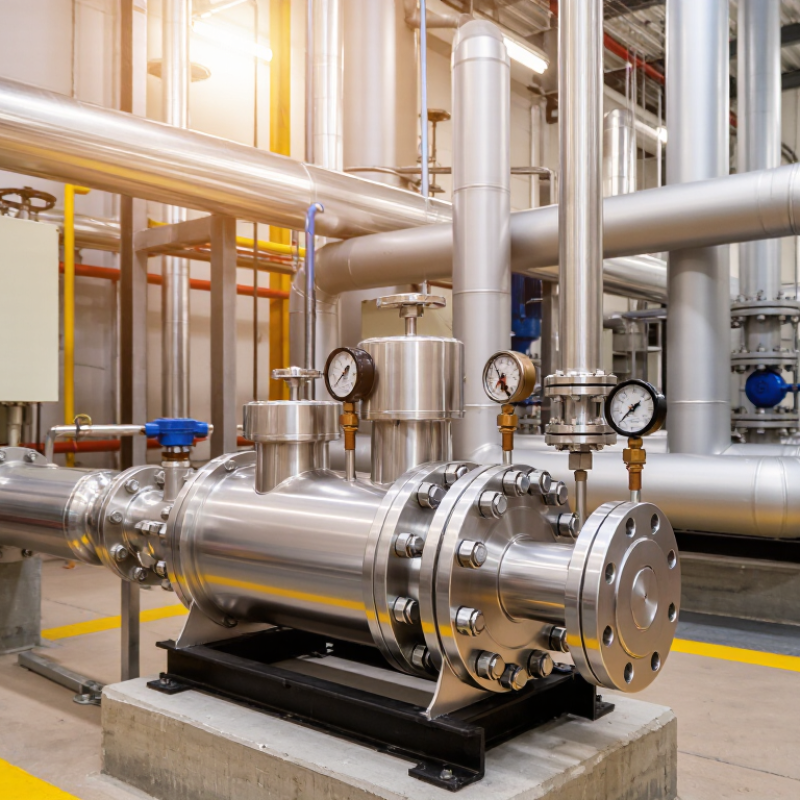
When choosing a high pressure pump, define flow and pressure at the same operating point, not as separate maximums. State the required flow in litres per minute or cubic metres per hour, then calculate the system’s total pressure requirement. Include elevation, pipe friction, valves, filters, nozzles, and pressure needed at the process. A pump’s discharge gauge can mislead if suction pressure changes. Measure at duty point.
Consider fluid temperature, viscosity, density, and solids. A water test may not predict performance with a thicker liquid. Specify continuous flow, start-up peaks, and expected operating hours; do not size only for a rare surge. The U.S. Department of Energy’s Improving Pumping System Performance: A Sourcebook for Industry reports that pumping systems use nearly 20% of global electricity and 25–50% of electricity in some industrial operations. That makes an inaccurate duty-point estimate potentially costly. The first estimate is rarely perfect.
Have an engineer check the real duty point against the pump curve, including efficiency, motor load, and the allowable operating range. Leave a justified margin for uncertainty, not an arbitrary oversizing allowance. A clogged strainer or long, narrow hose can raise required pressure. Record assumptions, then verify them with field readings after installation. This may feel fussy. It can catch errors early.
How to read this chart: Bars show representative operating pressure; flow rate is listed below each application. These are illustrative planning examples, not universal specifications. Select a pump to meet the required flow at the required pressure, allowing for losses in pipes, fittings, and other system components.
Choosing a high-pressure pump starts with the fluid, not the pressure rating alone. Water, detergents, oils, and chemical mixtures place different demands on wetted parts. Some stainless-steel grades resist many corrosive liquids, while bronze may suit certain clean-water duties. Neither is universal. Details matter.
Check every surface the fluid touches: the pump head, valves, plungers, and seals. A stainless-steel head paired with an incompatible elastomer can still leak or swell. For abrasive slurries, hardened metal or ceramic parts may reduce wear, but particles can quickly erode tight clearances. Request compatibility data for the actual concentration and temperature, not just a broad chemical name. Hot fluid changes the answer.
The operating environment matters too. Salt spray, washdown, outdoor exposure, and dry-running risk can affect coatings, fasteners, and seal life. Compare pH, temperature, viscosity, and solids content with the pump maker’s material guidance. If the mixture varies, describe its harshest expected condition. A small sample test may reveal staining or seal softening before installation, though it cannot replace a full service review. “Close enough” can mean more maintenance later; it is easy to overlook that risk.
| Fluid or service | Typical wetted-material option | Why it may fit | Key operating-environment checks | Important caveat |
|---|---|---|---|---|
| Clean water | 316 stainless steel or a suitable coated carbon-steel casing | 316 stainless steel is commonly used where corrosion resistance and clean fluid contact are needed. | Check water chemistry, temperature, chloride level, suspended solids, and whether the pump will sit idle while wet. | “Clean water” can still cause corrosion or deposits; material choice depends on the actual chemistry. |
| Brackish or chloride-bearing water | Duplex stainless steel, or a higher-alloy material for more severe conditions | Duplex grades can offer improved resistance to chloride-related pitting and crevice corrosion compared with common austenitic grades. | Assess chloride concentration, temperature, oxygen, flow velocity, deposits, and crevices. | No stainless grade is immune to every chloride environment; verify the exact grade and service conditions. |
| Seawater or severe chloride service | Super duplex stainless steel, nickel alloy, or another material selected for the specific seawater duty | Higher-alloy options may improve resistance to localized corrosion in demanding chloride environments. | Consider temperature, stagnant periods, crevice geometry, chlorination, biofouling, erosion, and galvanic couples. | Material selection must include fasteners, shafts, impellers, and other wetted parts—not just the casing. |
| Dilute acids or mixed chemical solutions | A corrosion-resistant alloy such as Alloy 625 or C-276, where compatibility data supports it | Nickel-based alloys are used in some corrosive services where standard stainless steels may not be suitable. | Identify every chemical, concentration, temperature, contaminants, and expected upset or cleaning conditions. | Acid compatibility varies greatly by acid type and concentration; confirm with chemical-specific corrosion data. |
| Alkaline solutions | 316 stainless steel, nickel alloy, or another material confirmed for the specific alkali | Several metallic materials can suit alkaline service, depending on the chemical and operating conditions. | Check concentration, temperature, aeration, contaminants, and any transitions between alkaline and acidic cleaning fluids. | Do not assume compatibility from pH alone; concentration and temperature can change corrosion behavior. |
| Fuel, oil, or hydrocarbon service | Carbon steel or stainless steel for metal parts; elastomers selected for the exact fluid | Metal compatibility may be straightforward, while seals and gaskets often determine chemical suitability. | Check aromatic content, additives, temperature, pressure cycling, and fire-safety requirements. | Confirm seal-material compatibility separately; elastomer performance can vary substantially between formulations. |
| Abrasive slurry or water with solids | Hardened stainless steel, wear-resistant alloy, or a suitable elastomer-lined surface | Wear-resistant surfaces can help manage particle impact and sliding abrasion in suitable pump designs. | Evaluate particle size, hardness, shape, concentration, velocity, and whether the solids are corrosive. | A material resistant to corrosion may still wear rapidly; pump geometry and operating speed also matter. |
| Hot process fluid | Temperature-rated stainless steel or alloy, with seals and gaskets rated for the duty | A suitable metal can retain required strength and corrosion resistance at elevated temperatures. | Check maximum and transient temperature, thermal expansion, pressure, fluid chemistry, and seal cooling or flushing needs. | The temperature limit of the complete pump assembly may be set by seals, gaskets, bearings, or coatings. |
Material suggestions are starting points, not universal guarantees. Confirm compatibility using the fluid’s full composition, concentration, temperature, pressure, and operating cycle, and review the manufacturer’s material and seal data before selection.
Choosing a high-pressure pump starts with the duty point: required flow, discharge pressure, fluid temperature, and operating hours. A multistage centrifugal pump suits steady, high-flow service; several impellers add pressure without relying on repeated piston strokes. A reciprocating plunger pump handles lower flows at very high pressures and can meter output precisely, but its pulsation may require dampers and sturdier pipe supports. There is no universal winner. Check the pump curve against the actual system curve, not just the maximum pressure printed on a specification sheet.
Performance also depends on how demand changes. Centrifugal pumps can lose efficiency when throttled far from their best-efficiency point, while variable-speed control may help when flow needs fluctuate. Plunger pumps can adjust flow through speed changes or unloading arrangements, though seals and valves need regular inspection. The U.S. Department of Energy’s Improving Pumping System Performance guide reports that pumping systems can account for 25–50% of industrial energy use in some facilities. That range is wide, but it makes energy a real selection factor. Compare input power at your expected operating points, not only rated flow. Ask for efficiency data, allowable operating limits, and maintenance intervals. A small mismatch can become costly. I would still verify the figures under site conditions; catalog curves are not the whole story.
Check Power, Control, Safety, and Maintenance Needs
A pump that looks powerful on paper may struggle with your actual setup. Match its pressure and flow rate to the nozzle, hose length, and task. A long hose can reduce pressure at the outlet. Check the motor’s voltage, current draw, and duty cycle against your power supply. If the pump will run for hours, a unit rated for continuous operation is usually a better fit. Measure the supply before buying. Guessing can be costly.
Control matters in daily use. Look for clear pressure adjustment and a gauge that is easy to read while the pump runs. A bypass or pressure-relief feature can help prevent damage when flow is interrupted.
Safety details deserve a close look: confirm that hoses and fittings are rated for the working pressure, and check for leak protection and accessible shutoff controls. Never rely on a fitting that merely seems sturdy. It may not be.
Maintenance affects reliability. Ask how often seals, filters, and valves need inspection, and whether routine parts are easy to reach. A filter that clogs with grit can reduce flow before the problem is obvious. Keep a simple service log with operating hours and replaced parts. It will not catch everything. Still, it can reveal a pattern of wear before a small fault stops the job.
Evaluate Total Cost, Reliability, and Supplier Support
A pump’s purchase price is only the starting point. Compare energy use, routine maintenance, replacement parts, and expected service life. A unit that costs less upfront may consume more power during long shifts. Ask suppliers for operating data at your actual flow rate and pressure, not just maximum ratings. Small details matter.
Reliability depends on how well the pump matches the job. Check fluid temperature, viscosity, duty cycle, and how often the system starts and stops. Ask about seal life, inspection intervals, and common failure points. If possible, review maintenance records from similar installations. A clean datasheet is useful, but it cannot show every messy condition on a working floor.
Supplier support can reduce downtime when a part fails or performance drops. Confirm response times, parts availability, and whether technical staff can help troubleshoot installation issues. Get those commitments in writing. I would also compare service costs, not just warranty length; a long warranty can still leave you waiting for a critical component. No estimate is perfect. Leave room in the budget for wear, unexpected repairs, and the occasional assumption that proves wrong.