Sealless Pumps for a Safer and Greener World

China’s vertical centrifugal pump market includes large industrial groups, specialized engineering firms, and smaller manufacturers with focused product lines. This article examines ten notable suppliers serving water treatment, municipal infrastructure, power generation, mining, chemical processing, and general industry.
A vertical centrifugal pump can look simple from outside. Its real performance depends on impeller design, shaft alignment, bearing support, materials, motor selection, and installation quality. Wet-well depth matters. So does the liquid’s temperature, solids content, and corrosiveness. A supplier offering stainless steel construction may suit chemical service, while cast iron can remain practical for ordinary water applications. The cheapest quotation is not always the lowest-cost choice.
Pump consultant and author Lev Nelik is often associated with the practical remark, “The pump does not pump water; the system does.” That observation deserves attention. A reliable manufacturer should understand the complete duty point, not only the nameplate flow and head. It should also provide testing records, performance curves, spare-parts guidance, and responsive technical support.
The ranking considers manufacturing experience, product range, engineering capability, certifications, export history, customer feedback, and after-sales service. Public information can be incomplete. Some companies publish impressive specifications but provide limited field evidence. Others may have strong factory expertise without polished English websites. That creates uncertainty.
This list is therefore a practical research starting point, not an absolute verdict. Buyers should verify factory identity, test procedures, material certificates, delivery records, and local support before signing a contract. A small detail can decide whether a pump runs quietly for years or vibrates during its first month.
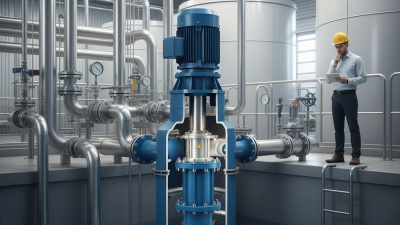
Vertical centrifugal pumps move liquid upward through a vertically arranged shaft and impeller. The motor transfers torque to the rotating impeller. As liquid enters the eye, centrifugal force raises its velocity and pressure. Guide vanes then convert part of that velocity into useful head.
These pumps suit deep wells, cooling-water systems, drainage stations, and large process tanks. Their narrow footprint is valuable where floor space is limited. A submerged suction section can also reduce priming problems. However, shaft alignment, bearing condition, and vibration still matter. Small installation errors become expensive over time.
The U.S. Department of Energy reports that pumping systems may consume 25% to 50% of industrial facility electricity, depending on the process and operating conditions. Its Improving Pumping System Performance sourcebook also stresses system-level assessment, not pump selection alone. A pump running far from its best efficiency point can waste energy through throttling and recirculation. Real sites are messier.
Hydraulic Institute guidance links reliable performance with correct hydraulic sizing, net positive suction head, and maintenance practices. Field measurements should include flow, discharge pressure, motor load, and vibration. A neat calculation can still mislead when water levels change seasonally. That weakness deserves attention before comparing China’s top vertical centrifugal pump manufacturers.
China Top 10 Vertical Centrifugal Pump Manufacturers?
Evaluating Chinese vertical pump manufacturers requires more than comparing prices. Start with the pump’s duty conditions: flow rate, head, liquid temperature, solids content, and operating hours. A reliable supplier should provide performance curves, material specifications, drawings, and test records. Ask whether the tested pump matches your final configuration. Small changes in impeller diameter can affect efficiency and vibration.
Visit the factory when possible, or request a live video inspection. Check machining areas, balancing equipment, assembly cleanliness, and pressure-testing procedures. Review quality certificates and confirm their validity with the issuing organizations. Technical engineers should explain NPSH, shaft alignment, bearing selection, and seal design clearly. References from similar chemical, municipal, or industrial projects are useful, but they need verification. A polished website proves little.
Tips: Request a sample inspection report and a recorded factory acceptance test. Compare measured flow, head, power, and vibration against the agreed limits. Also examine spare-parts availability, warranty terms, response times, and installation support. These details often reveal more than a low quotation. Do not ignore communication quality; unclear drawings can create costly site problems. Even careful evaluations have gaps. Supplier claims still require independent review and practical testing.
This chart presents a practical weighted evaluation framework for comparing vertical centrifugal pump manufacturers without ranking or displaying company data. The criteria reflect common industrial procurement priorities: verified hydraulic performance, energy efficiency, material suitability, quality control, compliance, service capability, and delivery reliability. Buyers should validate each score with test reports, datasheets, certifications, reference projects, and factory-audit evidence.
China’s Top 10 Vertical Centrifugal Pump Manufacturers are increasingly judged by evidence, not catalogue claims. Grand View Research estimated the global centrifugal pump market at roughly US$39 billion in 2023, with steady growth expected through the decade. This demand is strengthening China’s manufacturing base, especially for municipal water, cooling systems, chemicals, and industrial circulation.
A credible top-ten shortlist should examine hydraulic efficiency, shaft alignment, vibration control, corrosion resistance, and after-sales response. Factory audits matter. So do witnessed performance tests. Buyers should request head-flow curves, motor efficiency records, material certificates, and compliance with applicable GB/T, ISO, or API requirements. Vertical designs can save floor space, but poor installation may create pipe stress, seal wear, and unstable operation. Small details matter.
The ranking is not perfect.
Public market reports rarely publish one universally accepted list of ten Chinese manufacturers. Therefore, evaluation should combine production capacity, engineering experience, export records, testing facilities, and documented project performance. MarketsandMarkets has reported continuing demand for energy-efficient pumping equipment, driven by water infrastructure and industrial upgrades. Yet efficiency figures can change under actual site conditions. A pump tested with clean water may perform differently with solids, heat, or corrosive media. Practical buyers should compare lifecycle cost, spare-part availability, and service distance rather than choosing by purchase price alone. That approach is slower, but more reliable.
A useful review of China’s leading vertical centrifugal pump manufacturers should examine products, not slogans. Common offerings include vertical inline pumps, multistage pumps, turbine pumps, and wet-pit units. These designs serve water treatment, HVAC circulation, municipal supply, mining, power generation, and general process systems. Product selection depends on flow rate, head, fluid temperature, solids content, and installation depth.
Modern manufacturers increasingly apply CFD modeling, precision casting, laser alignment, and automated hydraulic testing. Variable-frequency drives help reduce energy use during changing demand. Condition-monitoring systems can track vibration, bearing temperature, and seal performance. Stainless steel, duplex alloys, and coated cast iron support different corrosion conditions. However, material claims need verification. A catalog cannot replace laboratory reports, reference projects, or a site inspection.
Industrial buyers should check pump curves at the real operating point, not only the maximum rating. NPSH margin matters. So does maintenance access. In a deep sump, poor access can turn a small seal failure into a costly shutdown. Testing under ISO-based procedures, documented spare-parts support, and clear warranty terms improve purchasing confidence. Still, no ranking stays permanent. A manufacturer with excellent water-pump experience may struggle with abrasive slurry. Even a correctly sized pump can underperform when piping, controls, or foundation work is poorly designed.
China’s top 10 vertical centrifugal pump manufacturers may offer useful market references, but rankings do not prove suitability. A reliable selection starts with your operating data: flow rate, total head, liquid temperature, viscosity, solids content, and installation depth. Ask the supplier to confirm the duty point on a performance curve, not through a casual email promise. Check impeller materials, shaft design, seal type, motor efficiency, and expected service life. Small details matter.
A qualified supplier should provide traceable technical documents, including drawings, test reports, material certificates, and inspection records. Request a factory video or an independent audit when an on-site visit is impossible. Speak with two recent customers using similar pumps. Ask about vibration, delivery accuracy, spare parts, and warranty response. Sales claims can sound convincing. Evidence is better. Be careful with unusually low quotations; they may exclude testing, installation support, or essential accessories. One overlooked detail can stop an entire process line.
Tips: Send the same specification sheet to every supplier. Compare identical conditions. Require a signed datasheet and acceptance criteria before payment. Confirm whether the quoted pump handles your actual liquid, not clean water only. Check the company’s registration, export experience, quality system, and after-sales contact. Do not rely on certificates alone; documents can be incomplete or outdated. A second technical review is worthwhile, even when the first recommendation seems correct. Procurement teams sometimes focus too much on price. That mistake deserves review.
Supplier-selection and pump-verification comparison framework based on commonly used industrial standards and practical purchasing criteria. The entries are technical checkpoints, not a company ranking.
| No. | Evaluation Dimension | Typical Technical or Commercial Benchmark | How to Verify the Supplier and Pump | Priority | Documents or Test Evidence |
|---|---|---|---|---|---|
| 1 | Vertical Pump Configuration | Confirm whether the design is vertical inline, vertical long-shaft turbine, vertical multistage, or vertical sump type. The configuration should match the suction arrangement, liquid level, installation depth, and maintenance space. | Review a dimensioned general arrangement drawing, shaft arrangement, impeller layout, column length, discharge orientation, and minimum submergence requirement. | Critical | General arrangement drawing, sectional drawing, foundation plan, installation manual. |
| 2 | Flow Rate and Total Head | The selected operating point should be close to the pump's Best Efficiency Point. A practical preliminary target is commonly within approximately 80%–110% of the rated flow, subject to the manufacturer's pump curve and application requirements. | Compare the duty point with the certified performance curve. Check shut-off head, rated head, minimum continuous stable flow, and allowable operating region. | Critical | Pump performance curve, test-point data, hydraulic calculation, signed technical offer. |
| 3 | Hydraulic Efficiency and Energy Use | Efficiency depends on pump size, speed, impeller design, liquid properties, and duty point. Compare wire-to-water efficiency rather than pump efficiency alone when evaluating the complete system. | Request rated-point efficiency, motor input power, power factor, motor efficiency, and annual energy-cost assumptions. Ensure the quoted values use the same operating conditions. | Critical | Certified performance test, motor data sheet, efficiency-class certificate, energy calculation. |
| 4 | Cavitation and NPSH | Available NPSH must exceed required NPSH with an appropriate site margin. The actual margin depends on the liquid, temperature, suction arrangement, transient conditions, and project risk level. | Calculate NPSHA using the lowest expected liquid level and highest operating temperature. Compare it with the supplier's NPSHR curve and confirm the test method used. | Critical | NPSH curve, suction-system calculation, cavitation test report, operating-limit statement. |
| 5 | Materials and Corrosion Resistance | Common material choices include cast iron, ductile iron, carbon steel, stainless steel, duplex stainless steel, and nickel-based alloys. Selection must reflect chloride level, pH, solids, temperature, and chemical compatibility. | Check wetted-part material grades, shaft material, coating system, elastomer compatibility, hardness requirements, and any corrosion allowance. | Critical | Material certificate, chemical-compatibility statement, coating specification, positive material identification record. |
| 6 | Motor, Drive, and Electrical Compliance | Verify voltage, frequency, phase, motor rating, starting method, enclosure protection, insulation class, temperature rise, and suitability for variable-frequency-drive operation. IEC 60034 is widely used for rotating electrical machines. | Match motor data with the site's electrical system. Confirm service factor, bearing arrangement, cable entry, rotation, overload protection, and hazardous-area requirements where applicable. | Critical | Motor data sheet, nameplate sample, IEC or equivalent test certificate, wiring diagram, VFD compatibility statement. |
| 7 | Mechanical Seal, Bearings, and Shaft Design | The seal and bearing arrangement should match pressure, temperature, solids content, dry-running risk, and operating speed. Vertical designs require careful control of shaft deflection, alignment, lubrication, and axial thrust. | Review seal type, seal faces, elastomers, bearing life calculation, shaft diameter, critical-speed analysis, axial-thrust capacity, and allowable starts per hour. | Critical | Seal data sheet, bearing calculation, shaft and rotor drawing, balancing report, maintenance schedule. |
| 8 | Manufacturing Quality and Testing | A reliable manufacturer should have documented quality procedures for casting, machining, welding, assembly, balancing, pressure testing, and hydraulic performance testing. ISO 9001 certification is useful but does not replace product testing. | Request the inspection and test plan, witness points, calibration records, pump test standard, acceptance tolerances, and sample quality records from a comparable project. | Critical | ISO 9001 certificate, inspection and test plan, calibration certificates, hydrostatic test record, performance test report. |
| 9 | Standards, Certification, and Traceability | Depending on the application, relevant references may include ISO 5199 for centrifugal pumps, ISO 9906 for hydraulic performance acceptance tests, IEC 60034 for motors, and API 610 for applicable petroleum, petrochemical, and natural-gas services. | Confirm the exact edition and scope of each standard. Check that certificates identify the legal manufacturer, certificate validity, model range, and applicable production site. | Critical | Valid certificates, standard-compliance matrix, serial-number traceability, declaration of conformity. |
| 10 | After-Sales Service and Total Cost | Compare purchase price, spare parts, commissioning, delivery time, warranty, training, inspection, energy consumption, maintenance intervals, and expected service life. A lower initial price does not necessarily mean lower lifecycle cost. | Obtain a written warranty, spare-parts list, response-time commitment, commissioning scope, recommended stock, repair capability, and references from installations with similar duty conditions. | High | Commercial offer, lifecycle-cost model, warranty terms, service network list, reference-project contacts. |
Before purchase, confirm the final selection against the approved process data, site conditions, applicable regulations, and a witnessed performance test where required.