Sealless Pumps for a Safer and Greener World

China Best Vertical Centrifugal Pump Manufacturer? The answer requires more than a low quotation or polished factory photographs. Buyers should examine hydraulic performance, material traceability, testing discipline, and after-sales support. A reliable manufacturer must explain head, flow, efficiency, NPSH, vibration limits, and operating temperature clearly.
Energy performance deserves close attention. The U.S. Department of Energy reports that pumping systems can consume 25% to 50% of industrial motor energy. Small efficiency losses become significant across continuous-duty installations. Industry guidance from the Hydraulic Institute also emphasizes correct pump selection, system design, and testing. These principles matter in cooling towers, water treatment plants, chemical facilities, and municipal pipelines. The right vertical centrifugal pump should match the real duty point, not an attractive catalog number.
Market reports from Grand View Research and MarketsandMarkets show steady global demand for industrial pumps, although their forecasts differ in scope and methodology. That difference deserves attention. No single report proves a manufacturer’s capability. Factory audits, ISO 9001 records, performance curves, hydrostatic tests, and inspection reports provide stronger evidence. Ask for witnessed testing when the application is critical. Check whether stainless steel, cast iron, or duplex components suit the fluid and temperature. Confirm shaft alignment and bearing protection.
No factory is perfect. We should admit that. Even experienced suppliers can overlook changing site conditions or maintenance practices. The better manufacturer listens, documents decisions, and corrects problems quickly. This guide compares Chinese vertical pump manufacturers through engineering experience, production capacity, certification, test facilities, customization, and long-term service reliability.
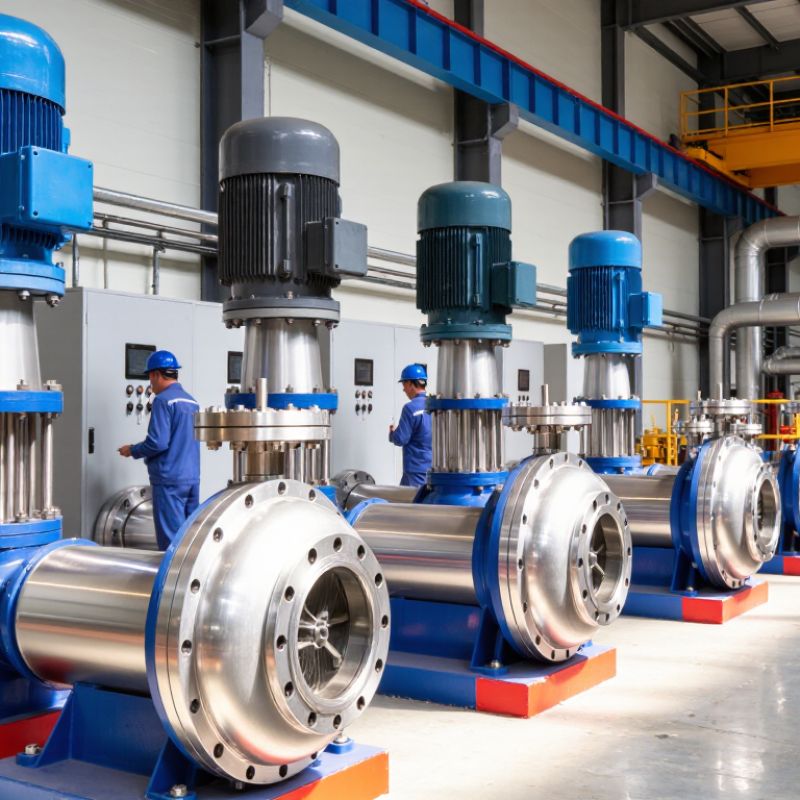
A vertical centrifugal pump moves liquid by converting motor power into fluid velocity and pressure. Its motor sits above the pump, while the shaft extends downward through a vertical column. The impellers then push liquid upward or through a discharge outlet. This arrangement saves floor space and suits deep tanks, sumps, cooling systems, and industrial water circulation. Some models use a wet-pit design, while others include a sealed column for cleaner installation.
In practical applications, pump length depends on liquid depth and required flow. Impeller design, shaft stiffness, bearing support, and motor capacity also affect performance. A well-selected pump should match flow rate, head, temperature, viscosity, and corrosion conditions. Field inspections often find vibration caused by poor alignment or unstable foundations. That detail is easy to underestimate. Energy efficiency matters too, but the cheapest purchase may create higher maintenance costs. Engineers should check NPSH, seal conditions, and access for routine servicing before approving a design.
Tips: Measure the liquid level carefully. Leave enough space around the discharge connection. Confirm the pump material suits the fluid. Check vibration after startup, not only during factory testing. Keep maintenance records. They reveal gradual wear. A useful review should question the original assumptions, because actual operating conditions often differ from early calculations.
How Does a Vertical Centrifugal Pump Work?
A vertical centrifugal pump moves liquid through rotating impellers mounted on a vertical shaft. The motor turns the shaft, and the impeller transfers mechanical energy into the liquid. Centrifugal force pushes fluid outward, while lower pressure forms near the eye. Atmospheric or tank pressure then drives more liquid into the suction opening. The discharge casing converts velocity into useful pressure.
The design suits deep tanks, cooling-water systems, and limited floor space. Its long column assembly keeps the motor above the liquid, while submerged bowls guide flow between stages. According to the U.S. Department of Energy’s Pumping System Sourcebook, pumping can represent 25–50% of industrial electricity use in some facilities. Small hydraulic losses matter. A blocked strainer, worn wear ring, or undersized suction line can sharply reduce performance. I have seen clear water turn cloudy after poor installation. That detail often reveals air entry or disturbed flow.
The International Energy Agency reports that electric motor systems consume about 53% of global electricity. Efficient pump selection therefore deserves careful measurement, not guesswork. Engineers compare head, flow, efficiency, NPSH available, and operating hours. Hydraulic Institute guidance also stresses avoiding excessive throttling and oversized pumps. Bigger is not always better. A vertical pump may vibrate when the liquid level falls below the recommended submergence. Designers should check shaft alignment, bearing lubrication, startup conditions, and minimum flow. Manufacturer claims still need field verification. That step is easy to skip.
Typical non-branded performance profile at constant rotational speed
A vertical centrifugal pump uses a rotating impeller to convert mechanical energy into fluid velocity. The diffuser or discharge passage then converts part of that velocity into pressure, lifting the liquid through the system. As flow rate increases, the available pump head normally decreases, while hydraulic efficiency typically rises toward a best-efficiency point and then declines.
Choosing the best Chinese vertical centrifugal pump manufacturer requires more than a low quotation. A strong supplier combines tested hydraulic design, stable machining, and clear technical communication. In practical projects, engineers should review flow, head, liquid temperature, solids content, and installation depth before discussing price. These details determine impeller geometry, shaft material, seal selection, and motor protection. Good manufacturers ask for this information early. That is a useful sign.
Chinese manufacturers can offer a broad industrial supply chain within one region. Foundries, machining workshops, motor producers, and testing facilities may operate within reachable distance. This can shorten sourcing cycles and support custom dimensions. Factory visits can reveal important details: clean assembly areas, calibrated instruments, traceable material records, and pumps running on a test bench. Ask for performance curves based on recognized test methods, not attractive figures copied into a brochure. Small difference. Big consequence.
Reliability depends on evidence after delivery. Look for documented factory acceptance tests, inspection reports, spare-parts planning, and responsive engineers who understand your operating conditions. A capable supplier should explain efficiency limits honestly, including vibration risks at low flow and corrosion concerns in aggressive liquids. No pump is perfect. Projects can suffer when buyers trust familiar specifications without checking site conditions. An experienced Chinese manufacturer earns confidence through repeatable production, transparent data, and practical support, not promises alone.
China Best Vertical Centrifugal Pump Manufacturer?
How to Compare China’s Leading Pump Manufacturers
Comparing Chinese vertical centrifugal pump manufacturers requires more than checking catalogue prices. Field experience shows that small design details matter: impeller balance, shaft alignment, seal selection, and bearing temperature can affect years of operation. The U.S. Department of Energy reports that pumping systems can represent 25% to 50% of industrial energy use. Efficiency deserves serious attention.
Start with verified performance data. Request certified curves for flow, head, efficiency, NPSH, and vibration. Compare test conditions, not attractive headline numbers. ISO 9906 testing can support a fair acceptance process, while API 610 may suit demanding process applications. The IEA’s Energy Efficiency 2023 report estimates that electric motor systems consume about 53% of global electricity. A slightly higher purchase price may reduce lifetime energy costs. Perhaps.
Inspect the factory and ask for material certificates, hydraulic balancing records, pressure-test results, and serialised inspection reports. Review installations handling similar fluids, temperatures, and operating hours. Ask how quickly spare seals, bearings, and couplings can be supplied. A responsive engineer often matters more than a polished brochure. I would also compare warranty exclusions carefully, because unclear terms create avoidable disputes. No catalogue replaces evidence. A low quote can still become expensive when efficiency, commissioning, or maintenance support is weak.
China Best Vertical Centrifugal Pump Manufacturer?
Selecting the right supplier requires more than comparing quotations. Start with duty data: flow, total head, liquid temperature, solids, voltage, and operating hours. A vertical centrifugal pump must match the system curve, not only the catalog point. The U.S. Department of Energy’s Improving Pumping System Performance reports that pumping systems can consume 25–50% of electricity in some industrial facilities. Efficiency deserves serious attention. Ask for certified performance curves, efficiency values, NPSH data, vibration limits, and material certificates. Request a witnessed factory performance test when the application is critical.
Supplier verification should be practical and documented. Review the factory’s quality procedures, calibration records, machining capacity, assembly area, and traceability system. ISO 9001 registration is useful, but it does not prove hydraulic performance. Ask for test records linked to the exact serial number. Check whether the supplier designs around recognized pump standards, such as ISO 5199 or applicable Hydraulic Institute guidance. Contact operating references with similar fluids and duty cycles. Weak references are a warning.
Tips: Compare lifecycle cost, not purchase price. The IEA identifies motor-driven equipment as a major electricity consumer worldwide, so a small efficiency loss can become expensive. Confirm spare-part availability, response times, warranty exclusions, and installation support in writing. Photograph the nameplate and test bench during inspection. I would also challenge unusually high efficiency claims; optimistic curves happen, and assumptions are easily missed. A second technical review may prevent the wrong pump from reaching the site.
| Evaluation Dimension | Recommended Technical Benchmark | Supplier Information to Request | Verification Method | Priority |
|---|---|---|---|---|
| Application Fit | The pump design should match the liquid type, temperature, solids content, corrosiveness, installation depth, and operating environment. | Completed data sheet covering liquid properties, operating temperature, solids size, site altitude, ambient temperature, and duty cycle. | Compare the proposed design with the project specification and confirm all deviations in writing before ordering. | Required |
| Flow Rate and Head | The selected duty point should be clearly identified on the pump curve, with rated flow and head shown in m³/h and m. | Certified performance curve showing rated point, shut-off head, operating range, and impeller diameter. | Check that the duty point lies within the preferred operating region and is not close to the curve limits. | Required |
| Operating Range | Confirm stable operation across the expected minimum, normal, and maximum flow conditions; avoid continuous operation near shut-off. | Minimum continuous stable flow, maximum allowable flow, recommended operating range, and system curve data. | Overlay the system curve and pump curve; request a hydraulic review for parallel or variable-speed operation. | Required |
| Efficiency and Energy Use | The supplier should provide hydraulic efficiency, pump input power, motor efficiency, and calculated annual energy consumption at the actual duty point. | Efficiency curve, motor data sheet, power factor, rated current, and energy calculation based on local operating hours. | Compare the quoted efficiency at the duty point rather than relying only on a maximum efficiency value. | Recommended |
| NPSH and Cavitation Control | Available NPSH should exceed required NPSH with a project-defined safety margin under the worst-case liquid and temperature conditions. | NPSH required curve, suction condition assumptions, liquid vapor pressure, and minimum liquid level. | Calculate NPSH available for the site and check it against the supplier's NPSH required value at maximum flow. | Required |
| Pump Construction | Wetted materials must be compatible with the liquid. Common options include cast iron, carbon steel, stainless steel, duplex stainless steel, and engineered plastics, depending on service. | Material specification for bowl, column, shaft, impeller, wear rings, fasteners, seals, and discharge head. | Review material certificates and confirm compatibility using recognized corrosion data or an engineering assessment. | Required |
| Shaft and Bearing Design | The shaft should be checked for torsional strength, critical speed, deflection, vibration, and suitability for the specified submergence depth. | Shaft material, diameter, bearing arrangement, allowable speed, lubrication method, and maximum unsupported length. | Request shaft calculation or design confirmation for long-shaft, high-speed, or high-temperature applications. | Recommended |
| Motor Compatibility | Motor voltage, frequency, phase, rated speed, starting method, insulation class, enclosure protection, and service factor must match the site power system. | Motor nameplate data, efficiency class, starting current, torque data, terminal arrangement, and variable-frequency-drive compatibility. | Compare motor data with the electrical specification and confirm starting limitations for the installed power supply. | Required |
| Applicable Standards | Performance testing should follow ISO 9906 or an equivalent project-approved standard. Motor requirements may reference IEC 60034, while petroleum applications may require API 610. | List of design, manufacturing, testing, electrical, welding, and coating standards applied to the quotation. | Check the exact edition, scope, and applicability of each standard; do not accept a generic “international standard” statement. | Required |
| Factory Performance Test | A witnessed or certified test should verify flow, head, power, efficiency, speed, and vibration at agreed test points. | Inspection and test plan, calibrated instrument list, test procedure, acceptance criteria, and sample test certificate. | Confirm test equipment calibration traceability and require the final report to show actual measured values. | Required |
| Vibration and Noise | Acceptance limits should be agreed before testing and should reflect the applicable pump, rotating-equipment, or project standard. | Vibration measurement locations, instrument accuracy, test speed, measured values, and noise data where required. | Ensure readings are taken at the specified operating point and recorded in the final quality dossier. | Recommended |
| Quality Management | A documented quality system should control design changes, purchasing, machining, assembly, inspection, nonconformities, and final release. | Quality certificate, organization scope, inspection procedures, nonconformance process, and sample quality records. | Validate the certificate through the issuing body where possible and conduct a remote or on-site audit for critical projects. | Required |
| Traceability | Critical materials and components should be traceable from purchase documents through manufacturing and final assembly. | Heat numbers, material certificates, inspection reports, component serial numbers, and assembly records. | Cross-check identification numbers on the pump, documents, and nameplate before shipment. | Recommended |
| Documentation Package | The final package should support installation, operation, maintenance, commissioning, and future spare-parts procurement. | General arrangement drawing, foundation loads, wiring diagram, operating manual, spare-parts list, test report, and preservation instructions. | Use a document register with approval status, revision number, submission date, and purchaser comments. | Required |
| Delivery and Preservation | The delivery plan should cover manufacturing lead time, inspection hold points, export packaging, corrosion protection, and storage duration. | Production schedule, packing specification, shipment dimensions, preservation period, and storage requirements. | Confirm that the quoted delivery date starts from a clearly defined milestone such as approved drawings or advance payment. | Recommended |
| Warranty and Service | Warranty terms should define coverage period, exclusions, response time, replacement responsibilities, and technical support channels. | Written warranty, commissioning support plan, troubleshooting procedure, service contacts, and spare-parts availability period. | Review the warranty together with the purchase contract and obtain written clarification for wear parts and operating-condition exclusions. | Required |
| Reference Projects | Relevant references should use comparable flow, head, liquid properties, materials, installation depth, and operating conditions. | Non-confidential project descriptions, pump duty data, service duration, failure history, and customer permission for reference checks. | Contact references independently and ask about actual performance, delivery accuracy, documentation quality, and after-sales response. | Recommended |
| Commercial Transparency | The quotation should separate pump, motor, accessories, testing, packaging, freight, taxes, commissioning, and optional items. | Itemized quotation, payment schedule, validity period, Incoterms, excluded scope, price-adjustment conditions, and spare-parts pricing. | Compare suppliers using the same technical scope and total cost of ownership rather than purchase price alone. | Required |
| Supplier Verification | The supplier should demonstrate legal manufacturing capability, stable production resources, qualified personnel, and control over outsourced processes. | Business registration information, manufacturing-site details, equipment list, organizational structure, quality records, and production capacity statement. | Use document checks, video inspection, third-party audit, or an on-site visit before placing a high-value order. | Required |
| Final Selection Method | Select the supplier with the best verified technical compliance, lifecycle cost, quality evidence, delivery reliability, and service capability. | Completed technical-commercial comparison matrix with weighted scores and a list of open deviations. | Require closure of all critical deviations before purchase-order release and retain the approved data sheet as a contractual document. | Required |