Sealless Pumps for a Safer and Greener World

Choosing high pressure equipment for global sourcing requires more than comparing prices, flow rates, and delivery promises. Buyers must understand how pumps, valves, pressure vessels, tubing, seals, and control systems will perform together. A component that looks suitable on paper may fail after repeated pressure cycles, temperature changes, or exposure to corrosive media. Small details matter. Check the pressure rating, material grade, test method, certification, maintenance access, and spare-part availability. Ask for traceable inspection records, not only a polished product brochure.
Russell J. Hemley, a leading high-pressure materials scientist, has described the field this way: “High pressure is a tool for discovering new materials and new physics.” That perspective also applies to equipment selection. Pressure changes behavior, and sourcing decisions must account for those changes. Experienced purchasers usually compare supplier audits, factory testing, weld procedures, calibration records, and documented quality controls. They also examine packaging, shipping protection, technical support, and local service capacity. A pressure vessel damaged during transport is not a bargain.
The process is rarely perfect.
Specifications can be incomplete. Supplier claims can be optimistic. Even experienced teams sometimes overlook installation conditions or operator training. A practical sourcing plan therefore includes independent verification, staged approvals, and realistic failure analysis. It should define acceptance criteria before purchase. It should also leave room for reassessment when operating data challenges the original assumption. Reliable global sourcing is not simply about finding equipment with the highest rating. It is about matching verified performance, risk control, and long-term support to the actual high pressure application.
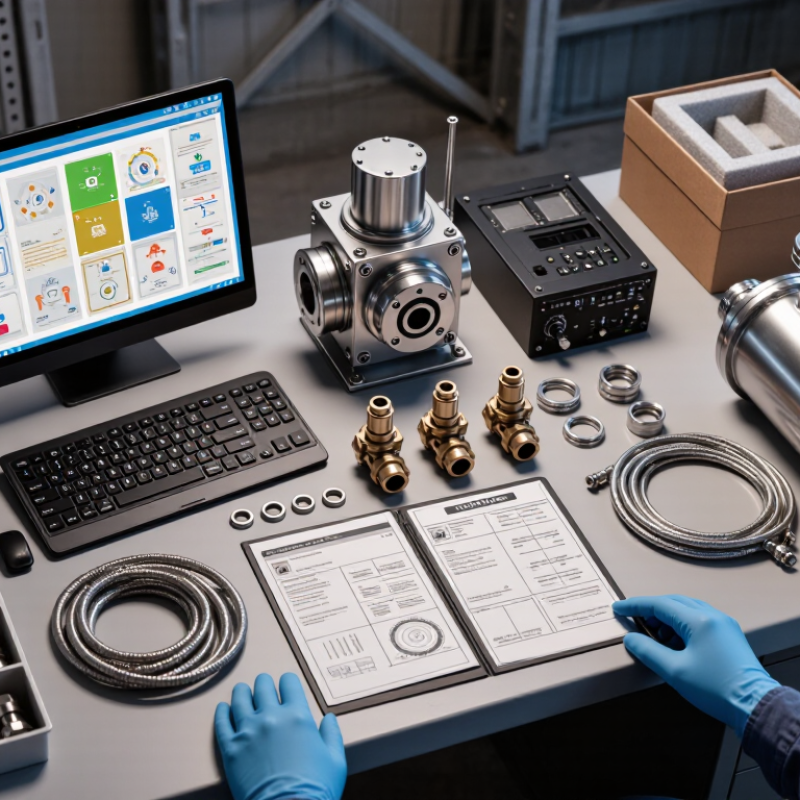
When choosing high pressure equipment for global sourcing, define pressure before comparing quotations. Specify normal, maximum allowable, and test pressure in clear units. Include startup surges, pulsation, vacuum conditions, and pressure losses across valves or filters. A system rated for average pressure may fail during a brief spike. Ask for documented calculations, material certificates, and test records, not only a catalog rating. Mistakes hide here.
Process conditions shape every component choice. Describe the fluid, concentration, viscosity, flow rate, temperature range, and cleaning method. Even clean water can become aggressive when heated or mixed with chemicals. For gas service, confirm compression heat and leakage control requirements. For liquid service, examine cavitation risk near pumps, restrictions, and sudden closures. Do not treat the process sheet as final. Conditions can shift.
The operating environment deserves equal attention. Record ambient temperature, humidity, dust, altitude, vibration, available utilities, and installation space. A pressure vessel designed for a temperate indoor room may need different protection in a humid coastal facility. Check local certification, inspection, import, and maintenance requirements before purchase. Request a traceable quality plan with hold points and independent inspection options. I have seen technically sound selections fail because operators could not read gauges or obtain replacement seals. That gap is uncomfortable. Review access, training, spare parts, and emergency procedures with the actual site team. Leave room for uncertainty.
| Requirement Dimension | What to Define | Representative Data | Why It Matters for Equipment Selection | Recommended Verification |
|---|---|---|---|---|
| Maximum Allowable Working Pressure | The highest pressure the equipment must safely contain during normal operation, including the design margin required by the applicable code. | Example: 350 bar(g) operating pressure; specify a rated working pressure equal to or above the calculated design pressure. | Determines pressure rating for pumps, vessels, valves, tubing, fittings, seals, gauges, and safety devices. | Review the pressure-rating plate, design calculations, hydrostatic test record, and pressure relief device set point. |
| Pressure Type and Transients | Gauge or absolute pressure, vacuum conditions, pulsation, surge, cyclic loading, and rate of pressure increase. | Example: 300 bar(g) steady state with short-duration surges up to 360 bar(g); 10 pressure cycles per hour. | Pressure spikes and repeated cycles can reduce fatigue life and require pulsation dampeners, accumulators, or higher-rated components. | Provide a pressure-time profile and confirm fatigue, surge, and cyclic-service calculations. |
| Flow Rate or Throughput | Required minimum, normal, and maximum flow, including turndown and allowable pressure drop. | Liquid example: 2 to 20 L/min; gas example: 5 to 50 Nm³/h at defined inlet conditions. | Controls pump size, valve orifice, compressor capacity, line diameter, motor power, and cooling demand. | Request performance curves, flow-calibration data, and guaranteed capacity at the specified pressure and temperature. |
| Fluid Phase and Composition | Liquid, gas, two-phase mixture, contaminants, water content, solids, toxicity, flammability, and chemical concentration. | Examples: water, hydraulic oil, nitrogen, carbon dioxide, oxygen-compatible gas, or a corrosive aqueous solution. | Determines material compatibility, lubrication method, seal design, compression ratio, cleanliness level, and ignition-control requirements. | Supply a complete fluid data sheet and check chemical compatibility, safety classification, and cleanliness requirements. |
| Operating and Design Temperature | Normal, minimum, maximum, start-up, shutdown, ambient, and heat-tracing temperatures. | Example: process temperature 5 to 80°C; ambient temperature −20 to 45°C. | Affects material strength, viscosity, seal elastomer selection, thermal expansion, lubrication, and instrument accuracy. | Confirm temperature derating, material certificates, seal temperature limits, and cold-start performance. |
| Materials of Construction | Wetted parts, pressure boundary, trim, tubing, fasteners, coatings, and non-metallic components. | Common choices include austenitic stainless steel, nickel alloys, carbon steel with compatible lining, PTFE, PEEK, and approved elastomers. | Controls corrosion resistance, hydrogen compatibility, erosion resistance, service life, and contamination risk. | Request material certificates, corrosion allowance, hardness data where relevant, and compatibility confirmation for the actual fluid. |
| Connection and Interface Requirements | Connection type, nominal size, pressure class, sealing method, pipe schedule, electrical supply, and communication protocol. | Examples: high-pressure tubing connection, flanged process connection, 24 V DC instrumentation, or 400 V AC motor supply. | Prevents installation mismatch, leakage, excessive dead volume, incompatible electrical systems, and commissioning delays. | Include interface drawings, dimensional tolerances, thread or flange standards, wiring diagrams, and installation orientation. |
| Safety and Pressure Protection | Relief valves, rupture discs, isolation valves, emergency shutdown, leak detection, guarding, and safe vent or drain routing. | Example: relief device set below the protected component’s allowable pressure, with discharge routed to a safe location. | Reduces risks from blocked outlets, thermal expansion, fire exposure, control failure, and operator error. | Verify relief sizing, set-pressure certification, discharge capacity, fail-safe behavior, and documented hazard analysis. |
| Operating Environment | Indoor or outdoor installation, humidity, salt spray, dust, corrosive atmosphere, vibration, altitude, hazardous area, and seismic conditions. | Example: outdoor coastal installation, 95% relative humidity, salt-laden atmosphere, and continuous mechanical vibration. | Determines enclosure protection, surface treatment, corrosion allowance, cooling method, mounting design, and electrical certification. | Specify environmental ratings, coating system, enclosure classification, vibration limits, and hazardous-area requirements where applicable. |
| Duty Cycle and Maintenance | Continuous or intermittent duty, operating hours, start-stop frequency, service intervals, spare parts, and local support capability. | Example: 24-hour continuous operation, 8,000 operating hours per year, planned overhaul every 12,000 hours. | Influences bearing life, seal wear, cooling capacity, redundancy, maintainability, and total cost of ownership. | Request mean-time-between-maintenance data, recommended spare-parts lists, service procedures, and lifecycle cost estimates. |
| Testing and Documentation | Inspection plans, pressure tests, functional tests, calibration, traceability, manuals, drawings, and certificates. | Typical records include hydrostatic or pneumatic test reports, calibration certificates, material certificates, inspection reports, and operating manuals. | Supports regulatory compliance, commissioning, international customs clearance, maintenance, and future audits. | Define the documentation package in the purchase specification and require document approval before shipment. |
| Applicable Codes and Market Requirements | Pressure equipment rules, piping codes, electrical requirements, inspection authority requirements, and destination-market conformity obligations. | Potential references include ASME B31.3 for process piping, ISO 4126 for safety devices, EN 10204 for material inspection documents, and destination-specific conformity rules. | Ensures the sourced equipment can legally be installed, inspected, operated, and serviced in the destination country. | Identify the governing jurisdiction before quotation and obtain a compliance matrix from the supplier. |
When sourcing high-pressure equipment, identify the governing safety standard before comparing price or delivery time. Common frameworks include ASME BPVC Section VIII, EN 13445, and ISO 4126 for safety devices. The correct choice depends on pressure, temperature, fluid type, vessel volume, and installation country.
Certification must cover more than a stamped nameplate. Request design calculations, material certificates, weld procedures, welder qualifications, non-destructive testing records, pressure-test results, and calibrated instrument reports. For equipment entering the European Economic Area, confirm whether the Pressure Equipment Directive 2014/68/EU applies. Higher-risk categories may require third-party conformity assessment.
The ILO estimated 2.93 million work-related deaths globally each year, with many incidents linked to unsafe systems and poor controls. That figure makes documentation a safety tool, not paperwork.
Tips: Ask for the exact certificate scope and issuing body. Verify serial numbers against test records. Check whether local authorities accept the stated standard. A certificate can be genuine but still unsuitable for your site.
I have seen procurement reviews focus heavily on pressure ratings while overlooking gasket compatibility and relief-valve discharge routing. That is an uncomfortable gap. Also review the manufacturer’s inspection plan before production, not after shipment. Industry guidance from the International Organization for Standardization and the European Commission supports documented risk assessment, traceability, and conformity verification throughout the equipment lifecycle.
How to Choose High Pressure Equipment for Global Sourcing
Material selection should follow pressure, temperature, fluid chemistry, and cycling frequency. Carbon steel suits many dry applications, while stainless steel resists moisture and contamination. Duplex alloys can improve chloride resistance, but their welding demands stricter control. Material certificates, heat numbers, and impact-test results should accompany every pressure boundary. Design details matter.
The design should align with recognized pressure-vessel rules, such as ASME BPVC Section VIII, and local inspection requirements. Check wall thickness, fatigue calculations, relief-device sizing, weld procedures, and non-destructive testing records. The U.S. Department of Energy reports that compressed-air leaks can waste 20–30% of compressor output. That figure makes isolation valves, leak testing, and service access commercially important. A compact vessel may still create expensive maintenance problems.
Supplier capability is more than production capacity. ISO’s 2022 Survey recorded 1,265,216 ISO 9001 certificates across 189 economies, but certification alone cannot prove pressure-equipment competence. Ask for recent project references, welder qualifications, calibration records, hydrostatic-test procedures, and traceable inspection reports. Verify whether the supplier controls subcontracted machining and heat treatment. Ask for evidence. Global sourcing also requires clear export documents, packaging tests, spare-part planning, and realistic delivery data. I would not accept an impressive brochure as technical proof. A weakness remains: many buyers compare purchase prices, yet overlook lifetime inspection costs and downtime exposure.
How to Choose High Pressure Equipment for Global Sourcing
Global sourcing begins with landed cost, not the factory quotation. A lower unit price can disappear after ocean freight, cargo insurance, duties, taxes, broker fees, and inland delivery. Request a cost sheet with each charge listed separately. Use current freight estimates, but add a reasonable buffer for fuel changes and port delays. Small details matter. A heavy pressure vessel may require special handling, lifting equipment, or an oversized container.
Logistics also depends on the equipment’s dimensions and technical design. Confirm packed weight, center of gravity, lifting points, and moisture protection before booking transport. Ask the supplier for tested drawings, packing photos, and a clear delivery schedule. In procurement reviews, missing dimensions have caused avoidable storage fees and rebooking costs. My own early estimates also relied too heavily on standard freight rates. That was a costly assumption. Seasonal congestion can change the result quickly.
Import compliance requires careful document control. Verify the correct HS classification with a qualified customs professional, then check applicable pressure equipment rules in the destination market. Review material certificates, inspection records, test reports, operating limits, and conformity documents before shipment. Some countries require local registration, authorized inspections, or language-specific manuals. Do not treat a certificate as universally accepted. Ask the importer, customs broker, and technical inspector to confirm requirements in writing. Keep commercial invoices, packing lists, origin documents, and serial numbers consistent. One mismatched number can delay clearance and complicate warranty decisions.
When sourcing high pressure equipment globally, quality cannot be judged from polished photos or low quotations. Ask suppliers for recent factory audit records, production procedures, and calibration evidence. An on-site or independent audit should examine material control, welding practice, pressure testing, and worker training. Look closely at corrective actions. A clean report is not always a strong report; unresolved findings reveal how seriously a supplier manages risk.
Testing must match the equipment’s intended pressure, temperature, medium, and operating cycle. Request signed test certificates, traceable instrument numbers, inspection dates, and acceptance criteria. Verify that certificates identify the actual unit, not merely a standard product series. Photographs of nameplates, weld areas, and test setups can prevent costly confusion during receiving inspection. Documentation is often treated as paperwork. In practice, it supports maintenance decisions, warranty discussions, and safe commissioning. Some records may look complete but still lack revision control or independent verification. That weakness deserves attention.
Tips: Compare audit findings with test results. Contact the testing laboratory directly when appropriate. Confirm spare parts, remote troubleshooting, training, and response times before purchase. Keep a written approval checklist. Support after delivery matters. Even experienced teams can miss small inconsistencies, so allow time for a second review.