Sealless Pumps for a Safer and Greener World

Choosing the right canned motor pump is not a simple catalogue exercise. It is a reliability decision made around fluid properties, process conditions, and maintenance limits. A pump may look perfectly sized on paper, yet fail when vapor pressure, solids, or temperature changes are ignored.
Heinz P. Bloch, a respected rotating-equipment specialist, has emphasized a practical principle: “Reliability begins with correct equipment selection.” This idea fits canned motor technology closely. Because the motor and pump share a sealed housing, the design can prevent shaft-seal leakage and reduce emissions. However, that sealed construction also demands careful evaluation. Cooling flow, bearing materials, differential pressure, and motor protection cannot be treated as minor details.
Start with the fluid. Is it corrosive, toxic, abrasive, volatile, or highly viscous? Record its temperature, density, vapor pressure, and solids content. Then examine the operating point, including flow rate, head, suction conditions, and expected variation. A pump selected only for normal conditions may struggle during startup or reduced-load operation.
Look closely at the process environment. A hot chemical line, for example, may require special alloys and monitored cooling circuits. A crystallizing liquid may need heat tracing or a different internal clearance. Small details matter.
There is also room for honest doubt. No selection method is perfect. Real plants change, operators improvise, and data sheets sometimes hide uncertainty. Confirm assumptions with the manufacturer, review operating history, and request performance data at actual conditions. The best canned motor pump is not merely efficient. It remains stable, serviceable, and safe when the process behaves differently than expected.
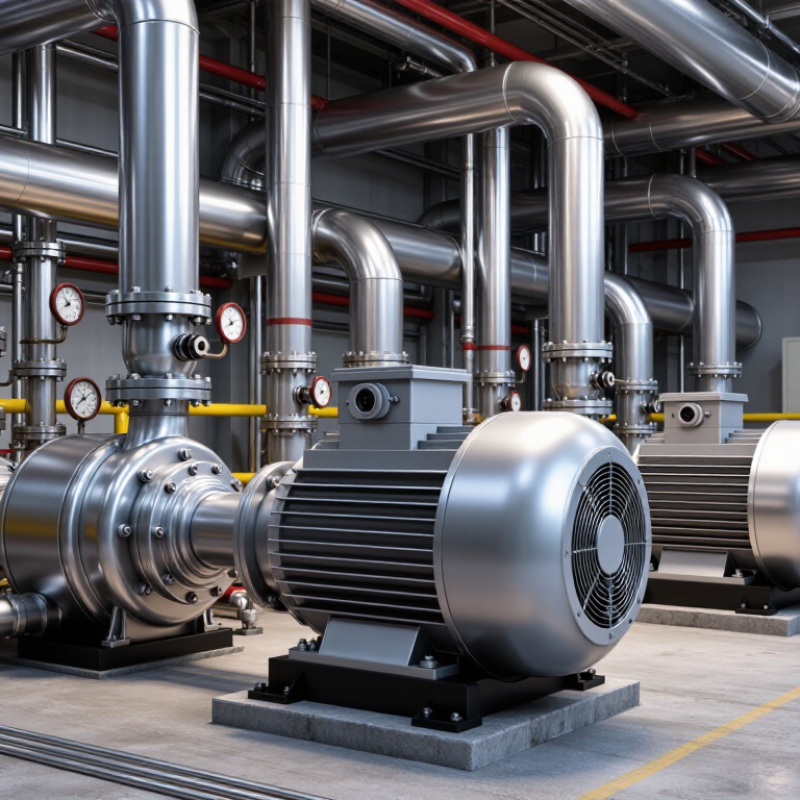
Choosing the right canned motor pump starts with defining the pump type and service conditions. Common designs include standard, high-temperature, high-pressure, and reverse-circulation models. Each uses a containment shell instead of a dynamic shaft seal. Seal leakage disappears. However, the shell, bearings, and motor still face corrosion, heat, and pressure risks.
API 685, 3rd Edition addresses sealless centrifugal pumps for petroleum, petrochemical, and natural gas services. It emphasizes containment-shell integrity, suitable materials, bearing lubrication, cooling, vibration control, and documented testing. The selected pump should match fluid vapor pressure, viscosity, solids content, temperature, differential head, and NPSH margin. The U.S. Department of Energy’s Improving Pumping System Performance sourcebook reports that pumping systems may consume 25–50% of industrial facility electricity. Poor hydraulic selection can therefore create a large operating penalty.
How to Choose the Right Canned Motor Pump?
Choosing a canned motor pump starts with five operating facts: flow, head, temperature, pressure, and viscosity. Record the real operating range, not only the design point. A pump selected for 20 m³/h may struggle when demand rises to 26 m³/h. Head must include elevation, pipe friction, valves, and heat exchangers. Small errors here can cause cavitation, vibration, or poor circulation.
Temperature changes both materials and vapor pressure. Check the fluid’s boiling margin at the pump inlet. Pressure also needs careful attention. The casing must withstand maximum suction, discharge, and upset pressure, not just normal pressure. API 685 provides widely used requirements for sealless centrifugal pumps. Hydraulic Institute guidance also recommends evaluating viscosity corrections rather than using water curves blindly. Thick fluids can sharply reduce flow and efficiency.
Viscosity is often underestimated. A liquid that looks mobile in a container may behave very differently inside a narrow impeller passage. The U.S. Department of Energy’s Pumping System Assessment Tool notes that pumping systems can consume 25–50% of industrial facility electricity. That makes correct sizing an energy issue, not merely a purchasing detail. I would also question every assumed value. Is the stated flow measured? Is the temperature seasonal? Is the fluid clean after startup? A neat datasheet can still describe the wrong duty. Check the worst credible condition, then confirm motor cooling and allowable temperature rise with the manufacturer.
Compare the required duty point with a preliminary screening reference for flow, head, temperature, pressure, and fluid viscosity.
This illustrative duty point represents 30 m³/h flow, 45 m head, 80°C fluid temperature, 10 bar operating pressure, and 20 mPa·s viscosity. The screening references are 100 m³/h, 80 m head, 150°C, 25 bar, and 100 mPa·s respectively. Final pump selection must confirm the actual pump curve, materials, vapor-pressure margin, motor limits, and applicable pressure and temperature ratings.
How to Choose the Right Canned Motor Pump?
NPSH margin deserves more attention than motor power or compact dimensions. A canned motor pump depends on the pumped liquid for bearing lubrication and cooling. Cavitation can damage these internal surfaces quickly. Listen for crackling sounds, unstable pressure, or unexpected vibration near the pump casing.
Start by calculating NPSHA at the pump suction flange. Include liquid temperature, vessel pressure, altitude, pipe friction, fittings, and actual flow rate. Then compare it with the supplier’s NPSHR curve at the same speed and capacity. Do not compare values from different operating points. Supplier data may use different test methods, so request the test standard and correction basis. A curve alone is not enough.
Keep a practical margin required by the project specification and supplier guidance. The needed margin changes with liquid properties, system transients, and measurement uncertainty. Hot liquids can reduce the margin sharply because vapor pressure rises. A neat calculation can still be wrong. I have seen designs ignore a short suction strainer, losing valuable pressure before startup. Check the minimum tank level, not only the normal level. Consider blocked vents, control-valve movement, and temporary flow increases.
Ask for certified performance data, including NPSHR, flow, head, speed, temperature, and liquid viscosity. Confirm whether the data represents the complete pump assembly. If the pump will operate far from its best efficiency point, request additional review. Margins can deceive. Field measurements after commissioning may reveal conditions that the original spreadsheet missed.
| Pump Reference | Duty and Hydraulic Conditions | NPSH and Cavitation Assessment | Screening Decision | |||||||
|---|---|---|---|---|---|---|---|---|---|---|
| Flow m³/h |
Differential Head m |
Liquid Temperature °C |
Motor Speed rpm |
Supplier NPSHr m |
Calculated NPSHa m |
NPSH Margin m |
Margin Ratio NPSHa/NPSHr |
Cavitation Risk | ||
| CM-01 | 20 | 42 | 25 | 2,900 | 2.1 | 4.8 | 2.7 | 2.29 | Low | Suitable |
| CM-02 | 35 | 38 | 40 | 2,900 | 3.4 | 4.6 | 1.2 | 1.35 | Medium | Verify System Losses |
| CM-03 | 50 | 55 | 60 | 2,950 | 4.8 | 6.0 | 1.2 | 1.25 | High | Increase NPSHa |
| CM-04 | 65 | 30 | 25 | 1,480 | 2.9 | 5.5 | 2.6 | 1.90 | Low | Suitable |
| CM-05 | 80 | 48 | 80 | 2,950 | 5.6 | 6.2 | 0.6 | 1.11 | Very High | Reject or Redesign |
Choosing the right canned motor pump requires more than matching pipe size and flow rate. Efficiency, motor power, and operating costs must be considered together. A pump with excellent peak efficiency may perform poorly when demand changes. Start by recording actual flow, pressure, liquid temperature, and daily operating hours. Measure it. Field readings are usually more useful than assumptions from design drawings.
Motor power should match the operating point, not an imagined worst-case condition. An oversized motor can increase purchase cost and energy consumption. An undersized motor may overheat, lose flow, or require frequent protection trips. Compare the pump curve with measured system resistance, then check motor efficiency at the expected load. Variable-speed operation can reduce throttling losses, but its controls also add cost and maintenance requirements. The cheapest control option is not always the cheapest over five years.
Operating cost includes electricity, inspections, spare components, and production interruptions. Estimate annual energy use from power input, running hours, and local electricity rates. Inspect temperature readings, vibration trends, and current draw during routine service. These details can reveal blocked strainers or poor alignment before failure. However, energy estimates remain imperfect when production schedules change. I would challenge any calculation based only on the nameplate rating. A reliable decision compares measured conditions, lifecycle cost, and required motor capacity, while leaving enough margin for safe operation.
A canned motor pump should match the fluid, temperature, pressure, and operating cycle. Material selection is not a catalog exercise. Ask for the wetted-part material, shaft alloy, bearing composition, and gasket details. Check compatibility with concentration changes, suspended particles, and cleaning agents. A pump that handles water may fail quickly with hot solvents or abrasive slurry. Small details matter.
Seal-less construction removes the conventional shaft seal, reducing leakage paths and routine seal replacement. It does not mean maintenance-free operation. Inspect bearing wear, monitor vibration, and watch for unusual temperature increases. During commissioning, record normal current and sound levels. These figures create a useful baseline.
In practice, operators sometimes focus on flow rate and overlook minimum flow. That mistake can damage internal bearings. A quiet pump is not always a healthy pump.
Certification should be verified through complete documents, not logos alone. Request the certificate number, issuing body, covered model, test scope, and production traceability. Confirm that the certificate matches the actual pump configuration. Review manuals, inspection records, and material certificates before installation. If documentation is vague, pause the purchase. I would also question unusually broad performance claims. Real systems rarely operate at one perfect duty point, so leave room for changing viscosity, temperature, and load.