Sealless Pumps for a Safer and Greener World

Top Marine Pumps Manufacturers for Global Buyers
Marine pumps are critical to ballast control, cooling, bilge drainage, firefighting, and fuel transfer. A failure can leave seawater on a steel deck, or overheat an engine room within minutes. Buyers therefore need more than catalogue capacity. They need verified efficiency, corrosion resistance, spare-parts support, and proven service experience.
UNCTAD’s Review of Maritime Transport 2024 reports that ships carry more than 80% of global merchandise trade by volume. This scale increases demand for dependable marine pumps across commercial vessels, offshore units, ports, and shipyards. The International Maritime Organization’s 2023 GHG Strategy also targets net-zero emissions from international shipping by around 2050. Efficient pumping systems can support that direction, although they cannot solve vessel emissions alone. That limitation matters.
According to the U.S. Department of Energy’s Pump Systems Matter guidance, poorly selected pumping systems may waste substantial energy through throttling, oversizing, and inefficient operation. Marine buyers should examine total lifecycle cost, not only the initial quotation. As marine engineering specialist Lars A. Røed explains, “A pump must be selected for the ship’s real operating profile, not an idealized datasheet.” His point is practical. Sea temperature, salinity, vibration, suction conditions, and maintenance access can change performance dramatically.
This guide compares leading marine pumps manufacturers using engineering capability, certification evidence, global service coverage, product durability, and buyer feedback. Rankings are never perfect. Regional support can matter more than brand recognition. A trusted manufacturer should make that evidence visible.
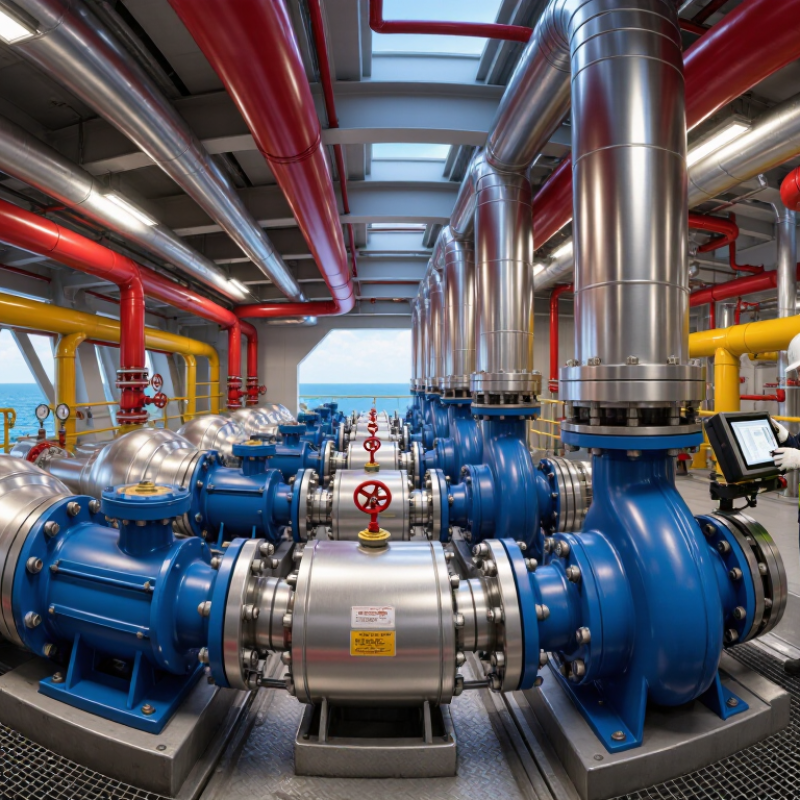
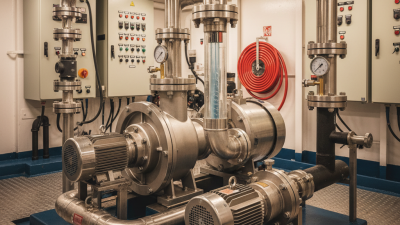
Marine pumps are not simply rotating machines. They are essential systems for seawater cooling, ballast transfer, bilge removal, fuel handling, and fire protection. Each duty requires different hydraulic performance. A centrifugal pump supports continuous, high-flow transfer, while a positive-displacement pump handles thicker fluids more effectively. Selection should begin with flow rate, pump head, temperature, salinity, solids, and available electrical power. Small errors matter.
UNCTAD’s Review of Maritime Transport 2024 states that ships carry over 80% of global trade by volume. This scale makes pump reliability an operational necessity, not a minor maintenance concern. The Fourth IMO Greenhouse Gas Study 2020 estimated that shipping produced 2.89% of global anthropogenic greenhouse-gas emissions in 2018. Efficient pumps can reduce auxiliary power demand when variable-speed control matches real loading conditions. Yet efficiency claims require scrutiny. Sea chest blockage, air ingress, and marine fouling can quickly erase laboratory gains.
Engineers should verify net positive suction head, corrosion resistance, seal compatibility, vibration limits, and redundancy. Practical commissioning records should include suction pressure, discharge pressure, motor current, bearing temperature, and vibration readings. Field experience shows that abnormal noise often appears before a serious failure. Ignoring it is risky. DNV’s Maritime Forecast to 2050 highlights efficiency improvements as a continuing priority, but vessel operators must assess complete systems rather than isolated pump curves. A correctly sized pump can still perform poorly with unsuitable piping, poor alignment, or inadequate maintenance access.
Selecting a marine pump manufacturer requires more than comparing catalog prices. Buyers should examine verified experience with seawater, fuel transfer, ballast, bilge, and cooling systems. Ask for performance curves, not only flow-rate claims. A reliable curve shows head, efficiency, power demand, and operating limits at different speeds. Request factory test records for pressure, vibration, leakage, and material quality. Small details matter.
Material selection should match the vessel’s environment. Duplex stainless steel may resist seawater better than standard steel, while suitable coatings can protect external surfaces. Manufacturers should explain shaft seals, impeller design, bearing life, and corrosion allowances in practical terms. Their engineers must understand classification requirements and provide traceable documentation for audits. Check whether drawings, manuals, and certificates are available in clear English.
Service capability often separates a dependable supplier from a cheap one. Evaluate response times, spare-parts availability, installation guidance, and technician support across your operating region. Ask for references from similar vessels, but review them critically. A successful pump on a harbor tug may not suit an offshore support vessel. Warranty terms should identify exclusions, maintenance duties, and replacement procedures. No manufacturer gets everything right. Independent inspection can reveal weaknesses before shipment, although it adds cost and may delay delivery. That trade-off deserves honest discussion. Keep records of factory contacts, approved materials, test results, and agreed delivery dates. Reliability is built through evidence, not confident promises.
Leading marine pump manufacturers for global buyers understand that reliability begins with the vessel’s real operating conditions.
They study seawater temperature, flow demand, pressure changes, and available installation space. A pump for ballast service may need different materials than one used for cooling or bilge drainage. Experienced manufacturers should provide test data, material certificates, and clear performance curves. Practical knowledge matters at sea.
Tips: Ask for factory test records, spare-parts availability, and service support in your region. Check whether the supplier can adapt voltage, connection standards, and coating requirements. Request references from vessels with similar duties. Small details prevent expensive delays.
A dependable manufacturer also explains limits honestly.
No pump fits every vessel. Some suppliers offer impressive efficiency figures, yet overlook vibration, noise, or difficult maintenance access. Buyers should review seal design, corrosion resistance, motor protection, and inspection procedures. Independent quality audits and recognized marine certifications can strengthen confidence, but paperwork alone cannot replace technical evaluation. I have found that clear communication often reveals more than polished sales material. Even strong suppliers may make assumptions, so drawings and operating data deserve careful review. Global buyers need durable equipment, responsive support, and documentation that remains useful after installation.
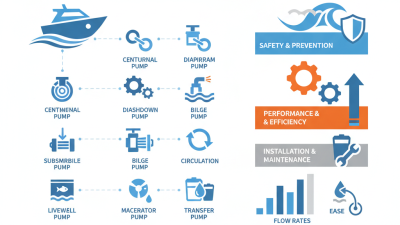
Marine pumps support several essential shipboard systems, and each type suits a different duty. Centrifugal pumps handle large water volumes for cooling, ballast, and fire protection. Positive displacement pumps deliver steady flow under higher pressure. They often serve fuel transfer, lubrication, and hydraulic systems. Diaphragm pumps can manage contaminated bilge water with less damage from suspended particles. The choice depends on viscosity, pressure, temperature, and available space.
Application details matter more than catalog capacity. A bilge pump must resist saltwater corrosion and tolerate occasional debris. A seawater cooling pump needs suitable alloys, mechanical seals, and easy access for inspection. In practice, engineers check vibration, suction conditions, noise, and motor load during commissioning. Small mistakes matter. An undersized suction line can cause cavitation, even when the pump appears powerful enough. Fire pumps also require dependable starting, emergency power arrangements, and regular performance testing.
Marine installations should follow applicable IMO and SOLAS requirements, classification rules, and relevant ISO standards. Bilge systems require attention to damage stability, isolation valves, alarms, and discharge controls. Fuel and oily-water systems need safe containment and pollution prevention measures under MARPOL requirements. Materials should match the fluid and operating temperature, not merely the purchase price. Documentation should include test results, flow curves, spare parts, and maintenance intervals. No selection is perfect. A practical review should question assumptions, especially when sea conditions, crew skills, or maintenance access differ from the original design.
Top Marine Pumps Manufacturers for Global Buyers
Purchasing marine pumps demands more than comparing catalog prices. Start with the duty point: flow, pressure, fluid temperature, salinity, and available NPSH. Materials must match seawater exposure and corrosion risks. Ask for performance curves, test records, class documentation, spare-parts lists, and factory acceptance testing. The U.S. Department of Energy’s Improving Pumping System Performance sourcebook shows why efficiency matters: under ideal centrifugal-pump conditions, reducing flow by 20% can reduce power demand by about 49%. Real vessels rarely achieve perfect savings.
Installation quality can decide whether a reliable pump survives its first season. Verify pipe supports, shaft alignment, coupling clearance, suction velocity, and foundation flatness. Poor suction design can create cavitation, noise, and premature seal damage. Commissioning should record vibration, bearing temperature, motor current, pressure, and flow. Details matter. A skipped baseline makes later diagnosis slower.
After-sales support deserves the same scrutiny as the pump itself. Confirm response times, technician coverage at major ports, warranty exclusions, remote troubleshooting, and local spare inventories. The IMO 2023 GHG Strategy calls for shipping emissions to fall by 20–30% by 2030, compared with 2008 levels. Efficient equipment and dependable maintenance now influence both operating costs and compliance planning. A low purchase price can become expensive after one failed mechanical seal. I would also challenge optimistic efficiency claims. Request tested data at the vessel’s actual duty point, not only the best-efficiency point. Practical records often reveal more than polished brochures.