Sealless Pumps for a Safer and Greener World

Choosing the best pump specialist in China requires more than comparing catalogue prices or stainless-steel finishes. Pump performance affects energy use, maintenance schedules, production stability, and operating safety. The International Energy Agency reports that electric motor systems consume about 53% of global electricity. Pumps form a major part of that demand in factories, water plants, and process facilities. Even a small efficiency difference can become significant after thousands of operating hours.
The U.S. Department of Energy notes that pumping systems can consume 25% to 50% of electricity in some industrial facilities. Therefore, a reliable supplier should provide verified efficiency curves, material specifications, factory testing, and practical technical support. Standards matter too. Buyers should examine compliance with ISO 5199, ISO 9906, or relevant Hydraulic Institute procedures, depending on the application. A capable Chinese pump specialist should explain head, flow, NPSH, seal selection, corrosion resistance, and lifecycle cost in clear language. Vague claims are not enough.
No supplier is perfect. That matters. A manufacturer may offer excellent centrifugal pumps but limited chemical-duty experience. Another may provide strong customization yet slower after-sales service. This guide compares China’s leading pump specialists through measurable evidence, field experience, certifications, and customer support. It also considers uncomfortable details, including delivery delays, documentation gaps, and performance differences between laboratory results and site conditions. The “best” supplier may not be the cheapest one. It should be the partner whose pump keeps moving reliably when the plant cannot afford an unexpected stop.
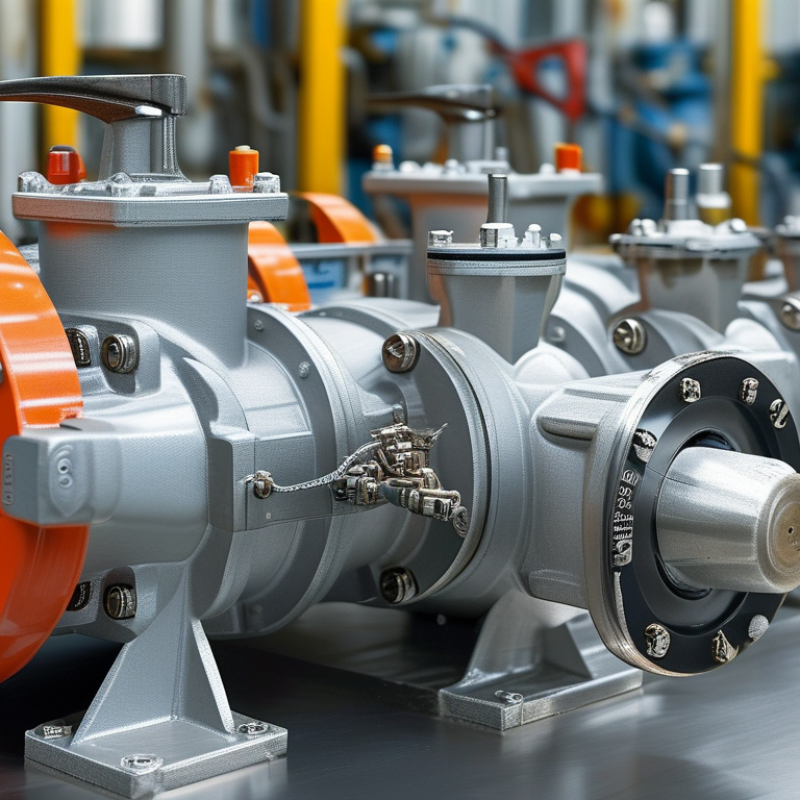
The best China pump specialist is defined by more than a broad product catalog. In real projects, dependable suppliers ask about fluid properties, flow rate, head, temperature, and operating hours before recommending equipment. They explain why a centrifugal, diaphragm, screw, or submersible design fits the duty. This practical questioning shows experience. It also reduces costly mismatches, such as excessive vibration, dry running, or frequent seal failure. A specialist should provide traceable test records, material details, performance curves, and clear tolerances. Claims need evidence.
Authority is visible in technical communication, not impressive slogans. A trustworthy specialist can discuss efficiency, NPSH, motor protection, corrosion resistance, and maintenance intervals in plain language. They should also support factory inspections, sample testing, documented quality checks, and responsive after-sales service. Ask how rejected parts are handled. Ask who answers when performance drops. Honest suppliers admit limits. Sometimes a recommended model looks suitable on paper but struggles with seasonal viscosity changes. That possibility deserves discussion before purchase, not after installation. Good judgment is imperfect, then improved through testing and feedback.
Tips: Request a witnessed performance test. Compare the curve with your actual duty point. Check spare-part availability and service response times. Confirm certificates independently when the application demands it. Keep written specifications. Small details matter.
China’s leading pump specialists offer more than one standard solution. Their catalogs commonly include end-suction centrifugal pumps for water transfer, cooling systems, and general industrial circulation. Multistage pumps provide higher pressure for boilers, building supply, and reverse-osmosis pretreatment. The correct choice depends on flow, head, fluid temperature, and operating hours.
For dirty water, submersible pumps and non-clog sewage pumps handle suspended solids more reliably. Self-priming pumps can simplify drainage where suction conditions change. Chemical plants often require magnetic-drive, diaphragm, or metering pumps. These designs reduce leakage risks and support controlled dosing. For oil and viscous liquids, screw, gear, and rotary lobe pumps may perform better than centrifugal models.
Details matter.
During supplier evaluations, I check hydraulic curves, material certificates, motor efficiency, seal construction, and factory test records. A specialist should explain NPSH requirements instead of promising unlimited suction performance. Site trials are valuable, especially when fluid viscosity changes with temperature. I have seen a pump meet its catalog flow yet consume excessive energy after installation. That experience made me compare duty points, not just maximum capacity. Some suppliers communicate clearly, but documentation can still contain gaps. Buyers should request dimensional drawings, spare-parts lists, vibration limits, and inspection procedures before ordering. A capable China pump specialist matches pump type to the actual process, then supports testing, commissioning, and maintenance with measurable evidence.
Which China Pump Specialist Offers the Best Pumps?
The strongest pump specialist is not defined by price or catalog size. Compare measured performance against your actual operating conditions. Check flow rate, head, efficiency, power demand, and required operating hours. A reliable supplier should provide certified test data, material specifications, and a clear performance curve. Ask whether testing followed recognized international standards. Data matters more than confident claims.
Field experience also reveals important details. Inspect the impeller finish, shaft alignment, seal arrangement, and coating quality. Ask how the pump handles suspended solids, temperature changes, or frequent starts. Technical engineers should explain cavitation risk and NPSH requirements in practical language. They should also recommend maintenance intervals based on real installations. A good answer is specific. Vague advice is a warning sign.
Tips: Request a complete factory test report and compare it with your duty point. Review efficiency at partial load, not only at maximum capacity. Ask for spare-part drawings, service records, and response times. If possible, inspect a working installation or speak with an actual operator. Do not ignore small inconsistencies between drawings and delivered equipment. I have found that careful questions often expose weaknesses early. No supplier is perfect, and even experienced buyers can overlook noise, vibration, or installation limits. Pause, verify, and document each technical promise.
| Evaluation Dimension | Suggested Weight | Objective Benchmark | Quality or Technical Evidence to Request | How to Compare Suppliers Fairly | Recommended Score |
|---|---|---|---|---|---|
| Hydraulic Efficiency | 20% | Compare efficiency at the specified duty point, including flow rate, total head, speed, and impeller diameter. | Certified pump performance curve, duty-point efficiency, shut-off head, run-out flow, and power curve. | Use the same fluid properties, operating speed, duty point, and tolerance method for every quotation. | 1–10 |
| Cavitation Performance | 10% | The available NPSH must exceed the pump's required NPSH with an appropriate site safety margin. | NPSH3 curve, test conditions, suction-pressure assumptions, and minimum continuous stable flow. | Recalculate NPSH using the actual liquid temperature, vapor pressure, elevation, suction piping, and flow rate. | 1–10 |
| Performance-Test Accuracy | 12% | Testing should follow a recognized pump test standard, such as ISO 9906, with the declared acceptance grade. | Test procedure, calibrated instrument list, uncertainty statement, test certificate, and measured duty-point results. | Check that the test standard, acceptance grade, instrument accuracy, and test fluid are clearly stated. | 1–10 |
| Mechanical Reliability | 15% | Construction should match the liquid's temperature, corrosion risk, solids content, pressure, and operating cycle. | Material certificates, shaft and impeller specifications, bearing arrangement, wear-ring design, and mechanical-seal data. | Compare material grades and allowable operating limits rather than relying only on general descriptions such as “heavy duty.” | 1–10 |
| Standards and Quality Management | 10% | The supplier should maintain a documented quality system and apply the standards relevant to the pump service. | Current quality-management certificate, manufacturing procedures, inspection and test plan, and traceability records. | Confirm certificate validity, issuing body, manufacturing site, and whether the certificate covers the quoted product scope. | 1–10 |
| Motor and Package Compatibility | 8% | Motor rating, voltage, frequency, enclosure, insulation class, starting method, and service factor must suit the installation. | Motor datasheet, efficiency and power-factor data, coupling details, baseplate drawing, and terminal-box information. | Check the complete pump-and-motor package at the real operating point, including starting torque and control method. | 1–10 |
| Operating Range and Control | 8% | The pump should operate reliably within the required flow range without excessive vibration, recirculation, or overheating. | Minimum continuous stable flow, preferred operating region, variable-speed limits, vibration limits, and control recommendations. | Compare the normal, minimum, maximum, and emergency operating points—not only the rated duty point. | 1–10 |
| Energy and Life-Cycle Cost | 7% | Evaluate total cost of ownership: purchase price, electrical consumption, maintenance, spares, downtime, and disposal. | Input power at actual duty points, efficiency data, recommended spare-parts list, service intervals, and warranty terms. | Calculate annual energy cost using local electricity prices and realistic operating hours, rather than comparing purchase prices only. | 1–10 |
| Documentation and Traceability | 5% | Technical documents should be complete, consistent, revision-controlled, and traceable to the supplied equipment. | General arrangement drawing, data sheet, wiring diagram, operation manual, inspection records, and serial-number traceability. | Use a document checklist and confirm that all dimensions, materials, ratings, and performance values are consistent. | 1–10 |
| After-Sales Support | 5% | Support should include commissioning guidance, troubleshooting, spare-parts availability, and a defined warranty process. | Service response procedure, spare-parts lead times, technician availability, warranty exclusions, and escalation contacts. | Request written service commitments and verify the supplier's ability to support the installation location. | 1–10 |
| Overall Decision Rule | The best pump specialist is the supplier with the highest verified weighted score, provided that all mandatory safety, material, performance, and documentation requirements are satisfied. | ||||
| Suggested Rating Scale | 1–3: weak evidence or major risk; 4–6: acceptable with conditions; 7–8: strong and well documented; 9–10: excellent, independently verifiable, and closely matched to the application. | ||||
China pump specialist solutions support many industries, from water treatment and agriculture to mining, construction, and food processing. Each sector needs a different pumping approach. Municipal plants often require corrosion-resistant pumps for moving wastewater and treated water. Farms benefit from efficient systems that deliver stable pressure across long irrigation lines. Mining sites need rugged equipment for abrasive slurries, where ordinary impellers may wear quickly.
Food processors usually need hygienic pumps with smooth internal surfaces and easy cleaning access. Chemical facilities require careful material selection because aggressive liquids can damage seals and casings. An experienced China pump specialist can review flow rate, pressure, temperature, viscosity, and installation conditions before recommending equipment. In real projects, this prevents costly oversizing and repeated maintenance. Still, a specification sheet cannot reveal every site problem. Field testing matters.
Tips: Confirm the required flow and head with measured operating data. Check seal materials against the actual fluid, not its common name. Ask for performance curves, efficiency information, inspection records, and spare-parts support. Visit the production site when possible. Small details matter. A slight mismatch in motor size or pipe diameter can increase energy use for years. Some buyers focus only on purchase price, which is understandable but incomplete. Total operating cost often tells a different story.
Choosing the best China pump specialist requires more than comparing catalog prices. The critical factors are application knowledge, testing discipline, documentation, and after-sales support. Grand View Research estimated the global industrial pumps market at about USD 66.4 billion in 2023, showing strong demand but also intense supplier competition. Bigger output does not guarantee better engineering.
Start with the duty conditions. A reliable specialist should calculate flow, head, fluid temperature, viscosity, solids content, and corrosion risk. Ask for pump curves, efficiency data, material certificates, and test records. The U.S. Department of Energy reports that pumping systems can consume 25–50% of electricity in some industrial facilities. Correct sizing matters. A pump that runs far from its best efficiency point may produce noise, vibration, and unnecessary energy costs. Small details matter.
Factory capability also deserves close inspection. Look for calibrated test benches, traceable quality records, balanced impellers, and clear inspection procedures. ISO 9906 provides internationally recognized acceptance grades for rotodynamic pump performance testing. However, paperwork alone can mislead. I would request a witnessed test using conditions close to the actual site. No specialist is perfect. One weak point may be slow technical communication after delivery, especially across time zones. Response time, spare-parts planning, installation guidance, and warranty terms should be tested before purchase. A polished factory tour is not enough. Real reliability appears under pressure.